On Sept. 14, 1966, the 196th Light Infantry Brigade, 25th Infantry Division, launched Operation ATTLEBORO around Tay Ninh City as a search and destroy operation of nearby Viet Cong (VC) logistics centers and operational bases. The size of the operational area and troop involvement quickly expanded, as U.S. forces had disrupted a pre-planned offensive by the North Vietnamese army (PAVN) and VC in the same region. At the operation’s conclusion on Nov. 25, 1966, ATTLEBORO had grown to eighteen American and three South Vietnamese infantry units, making it the largest allied operation of the war at that time.
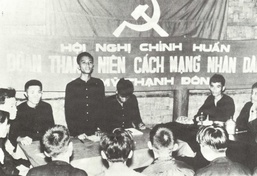
Over the course of the operation, hundreds of documents and photographs related to the PAVN and VC were captured, revealing not only the locations of other enemy bases but also highlighting the methods and means by which the enemy operated in and amongst the Vietnamese civilian population. Various agencies, such as the Combined Intelligence Center, Vietnam (CICV), were tasked with exploiting these captured materials for psychological warfare, propaganda, and interrogation purposes. In some cases, the photographs were compiled and disseminated to various organizations and units by the Military Assistance Command, Vietnam (MACV) Office of the Assistant Chief of Staff, J-2, as instructional aids. Photographs were sorted into categories such as “canal construction, production, medical activity, propaganda, and training...to provide visual information on various aspects of Viet Cong activities which directly affect the efforts of the Free World Forces operating in South Vietnam.”
One such compilation of photos is held in the historical document collection of the U.S. Army Intelligence Center of Excellence Command History Office. The report includes more than forty photo negatives captured by the 25th Infantry Division. Some specifically highlight the production methods of VC propaganda, such as photo and video equipment, methods of film development and processing, use of printing presses, and production of various propaganda newspapers. Other photographs showcase various communal gatherings, “Memorial Day” celebrations, and educational activities described by the MACV J-2 as “very effective means of building solidarity and getting the people to identify with and support the Communist cause.” Soldiers and civilians were asked to report back to the J-2 if they could positively identify any persons or places.
Article by Erin E. Thompson, USAICoE Staff Historian. New issues of This Week in MI History are published each week. To report story errors, ask questions, request previous articles, or be added to our distribution list, please contact: TR-ICoE-Command-Historian@army.mil.