JACKSONVILLE AIR NATIONAL GUARD BASE, Fla.- A restructured training curriculum and deliberate mentorship approach at the 125th Fighter Wing (FW) student flight has driven a notable surge in basic military training (BMT) honor graduates. These changes were implemented under the guidance of the 125th Force Support Squadron through the Force Development Office. There was a 22% increase in BMT honor graduates from the second to the third quarter of 2026, with 25% of all wing enlistees earning top honors at BMT this past quarter. The noticeable increase in honor graduates gave quantitative proof that the recent changes made in student flight training is successfully preparing non-prior service enlistees for service in the Florida Air National Guard.
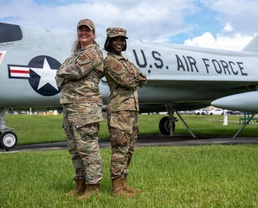
The program, managed by both Staff Sgt. Noorie York, student flight noncommissioned officer in charge, and Staff Sgt. Jennifer Clark, student flight training specialist, transitions newly enlisted recruits from civilian life into a disciplined military environment before they depart for BMT at Lackland Air Force Base, Texas.
Rather than treating the pre-BMT period as a passive holding pattern, the 125th FW student flight team leaders built a foundation focused on military fundamentals, physical readiness, and accountability. Many active duty recruiters will do something similar with their new recruits during the Delayed Entry Program to help prepare them for BMT and military life.
"We saw an opportunity to make the time before BMT more purposeful," York said. "These airmen had already raised their right hand, and we wanted student flight to be more than somewhere they reported once a month while waiting to ship. We wanted to use that time intentionally to begin developing the standards, habits, confidence, accountability, and military foundation they would need as airmen."
During regularly scheduled drill weekends, the student flight undergoes rigorous, detailed instruction. Trainees practice military knowledge, ceremonies, reporting statements, customs and courtesies, and flight formations. Additionally, trainees complete a standardized mock physical fitness assessment every Sunday to track their readiness against Air Force physical standards.
"Every minute counts, especially during a two-day drill weekend," said Clark.
Both members leverage diverse backgrounds to balance strict military bearing with supportive development. York, a naturalized U.S. citizen originally from Tanzania who enlisted in 2015, brings a background in counseling. Clark, who previously served nine years in the Wisconsin Army National Guard before joining the Florida Air National Guard almost four years ago, applies her eight years of classroom teaching and university academic advising experience to curriculum development.
"Our leadership styles complement each other," Clark said. “We create an environment where they are comfortable asking questions and making mistakes here, so they can correct them before facing military training instructors."
A cornerstone of the program's recent success is the integration of "break-in-training" airmen trainees who have completed BMT and are awaiting technical training start dates. These returning members step into leadership roles, teaching drill movements, answering questions about recent BMT expectations, and mentoring recruits. "The concept of teamwork and wingmanship is working," York said. "We had one member who struggled with fitness, lost nine pounds while in student flight before shipping, and gained pounds of muscle after BMT. Now that he is back, he is actively training the recruits who are currently struggling."
York said she believes that leaders produce leaders and that she tries to instill this perspective amongst her trainees.
The student flight instructors also partner with various resources and support services across the Florida National Guard, helping trainees understand the wide range of benefits that the Air National Guard has to offer. As the 125th FW continues its operational conversion to the F-35A Lightning II, the student flight leadership remains focused on feeding disciplined, resilient airmen directly into the wing's operational squadrons.
"We are temporary stewards of these trainees," York said. "They will eventually move into squadrons throughout the wing where other leaders will depend on them. If we can send them forward disciplined, confident, and ready to care for the wingmen around them, we have accomplished the mission."