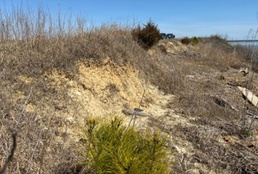
Naval Facilities Engineering Systems Command (NAVFAC) Washington completed three shoreline and stream stabilization projects across the National Capital Region (NCR), investing $4.5 million to protect Navy infrastructure from erosion and extreme weather.
The projects address stabilization, restoration and protection of eroded banks caused by storm events and flooding at Naval Support Facility (NSF) Dahlgren and Naval Surface Warfare Center (NSWC) Carderock, safeguarding infrastructure, property and mission-essential assets for the warfighter.
At NSF Dahlgren, 1,180 linear feet of the Potomac River Test Range shoreline was reinforced with buttress protection, a low-profile sill, cobble apron and marsh plantings. This $1.25 million investment supports continuity of research, development, testing and evaluation missions.
A second Dahlgren project stabilized a 560-foot stretch of shoreline within 60 feet of Navy buildings and structures. The $2.1 million effort used stone breakwaters, cobble apron and sand and gravel fill to create more than half an acre of habitat through meadow seeding and marsh plantings.
At NSWC Carderock, a $1.1 million project stabilized Rock Run streambanks and reinforced Witex Road Bridge footers, protecting the installation’s logistics corridor and mission-essential deliveries.
NAVFAC Washington Environmental Compliance Director Nicole Hernandez said by combining engineered protections, the team effectively constructed layered defenses to absorb immediate impacts “and adapt over time to flooding and extreme weather events.” She added, “This approach is essential for long-term resilience, ensuring our coastal installations remain operational, protecting mission continuity and warfighter readiness against evolving environmental challenges.”