Aug. 1 began like any other summer in Spokane. By the afternoon, wildfires were spreading across parts of Spokane and Stevens counties, threatening homes and forcing residents to evacuate.
For Sgt. Keegan Tarbell, the days that followed were spent watching news reports, checking his phone and reaching out to the people closest to him.
“As someone who lives in Spokane, it’s been really tough to see events unfold over the last week to a week and a half,” Tarbell said. “My wife and I spent a good chunk of the first weekend watching our phones and news updates on the fires, and checking in with friends and family as to their status and whether they were safe or if they needed anything.”
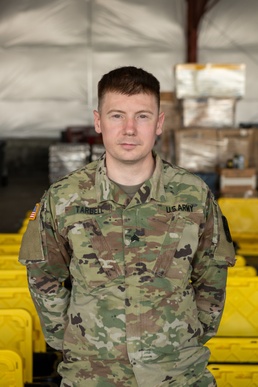
Tarbell is a local schoolteacher and a soldier assigned to the Washington Army National Guard’s 341st Military Intelligence Battalion. When the fires struck, however, he first responded simply as a member of his community.
Before receiving military orders, Tarbell volunteered at a local school and community center. He watched children while their parents completed insurance paperwork, sought assistance and worked to meet their families’ immediate needs.
It was one way he could help while schools, food banks, businesses and relief organizations throughout the area rallied around families affected by the fires.
“It has been really amazing seeing the various groups in the Spokane area that have come together to try and alleviate a lot of the hardships that many of the members of our community have experienced,” Tarbell said. “The local schools, food banks and organizational groups of all types have kind of come out of the woodwork that you wouldn’t normally think about.”
A few days later, Tarbell had another opportunity to help—this time as a Washington Army National Guard soldier.
Tarbell began serving on state active duty as part of the Washington National Guard’s support to the Spokane-area wildfire response; he worked alongside other Guard members and the American Red Cross to prepare emergency relief packages for affected residents.
The packages contained water, meals, work gloves, trash bags, quick-dry towels, wipes and other cleanup supplies. Guard members filled the packages before loading and delivering them to neighborhoods where the fires had destroyed homes.
For Tarbell, the work offered a view of the relief effort from beginning to end.
“As a Guardsman, seeing some of that, and how things have been donated for relief efforts, and how they’re organized by the Red Cross and other organizations and put into the community is really cool,” he said.
The mission brought together Washington Army and Air National Guard members from units across the state. Some had seen one another in passing, but many had never worked together directly before responding to Spokane.
“We have Air National Guard from units I haven’t even heard of or worked with before,” Tarbell said. “We have quite a few Army National Guard that I might have seen in the hallways or talked to, but have not worked with directly before.”
Together, the Guard members helped relief organizations organize donated supplies, assemble recovery packages and move them into affected communities. The mission supported local organizations already working to reduce the immediate burden on displaced families.
“The relief that they have brought to a lot of the families, or just the burden they’ve tried to take off their shoulders, even if it’s only for a little bit, has been pretty inspirational,” Tarbell said.
The Washington National Guard supports local jurisdictions and first responders by providing additional personnel and capabilities during emergencies. Because its soldiers and airmen live and work throughout the state, those missions can place Guard members in the same communities they call home.
For Tarbell, that connection extends beyond his time in uniform.
Although the area surrounding his school was not directly affected by the fires, he expects their effects to enter the classroom when students return. If a student did not lose a home, Tarbell said, it may have been a grandparent, cousin or friend who did.
Those relationships mean the recovery will remain personal long after his state active duty orders end.
As Tarbell carried emergency relief packages into neighborhoods damaged by the fires, he was serving Spokane as a Washington Army National Guard soldier. When the military mission ends, he will remain in the community as a teacher, resident and neighbor.