Two researchers from the U.S. Army Engineer Research and Development Center’s Cold Regions Research and Engineering Laboratory (CRREL) in Hanover, New Hampshire, have been awarded a national environmental award from the U.S. Army Corps of Engineers (USACE).
Drs. Adrian Doran and Kyle Dunn, both CRREL research physical scientists, were part of a multidisciplinary research team that earned the USACE Environment Quality Award for their work on the Wetlands Regulatory Assistance Program, an initiative that provides scientific and engineering expertise in support of environmental regulatory decisions regarding wetlands and aquatic resources.
The Environmental Quality Award recognizes Corps employees for their significant contributions toward leveraging environmental stewardship as a force multiplier – enhancing military readiness, strengthening strategic partnerships and supporting community well-being.
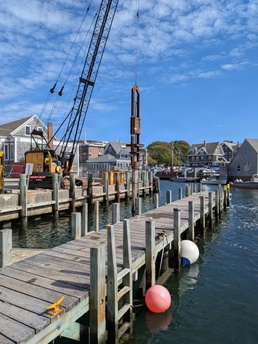
The research team, which also included scientists from the USACE North Atlantic Division, was honored for addressing a critical hydroacoustic data gap in the Endangered Species Act (ESA)-compliant permitting of impact and vibratory pile driving used in building coastal infrastructure such as piers, bulkheads and docks.
Prior to the team's work, measurement of hydroacoustic impact had only been performed on large-diameter piles, not the 12-inch or less diameter piles normally used in smaller scale, often residential projects. This meant that regulatory review of these projects often relied on estimating the hydroacoustic impacts of smaller piles based on test data with uncertain accuracy.
Working in close coordination with the National Oceanic and Atmospheric Administration and the Woods Hole Oceanographic Institution, the team identified gaps in existing literature, collected targeted field data, and integrated the smaller pile findings into USACE division-specific regulatory tools.
The resulting science-based acoustic proxies support faster, more consistent ESA effects determinations and streamline Army permitting, while maintaining appropriate protection for listed species, with applicability across the nation.
“Adrian, Kyle, and their project teammates did exceptional work turning sound science into practical tools that USACE districts can put to use,” said Paul Kutia, chief of CRREL’s Signature Physics Branch. “Their efforts will help USACE better protect endangered species while reducing ambiguity and improving the efficiency of project evaluations and approvals—ultimately enabling faster, more confident decisions based on the best available science.”