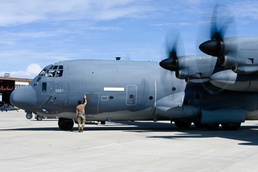
KIRTLAND AIR FORCE BASE, N.M. — A combat rescue does not begin when a distress call echoes through a radio. It begins at 4 a.m. on a cold flightline in New Mexico, long before the sun crests the Sandia Mountains.
When the crews of the 155-aircraft task force pushed into the hostile Zagros Mountains to rescue the downed "Dude 44" F-15E aviators, their success was not born of improvised heroism. It was the direct result of a grueling, uncompromising training pipeline managed by the 150th Special Operations Wing and the 188th Rescue Squadron at Kirtland Air Force Base, N.M.
Transforming a capable aviator into an elite Combat Search and Rescue operator requires a crucible. At Kirtland, that crucible is defined by months of intense simulator and academic training, culminating in 11 critical training flights. Over the course of these flights, students transition from basic airmanship to mastering complex tactical maneuvers such as low-level night-vision flying, contested aerial refueling, and rapid infiltration—all under the watchful, exacting eyes of the 188 RQS instructor cadre.
“Real-world rescue missions are unbelievably complex and rarely go the way they are planned, but here at the schoolhouse, we instill a solid foundation of airmanship and procedures, combined with sound tactics and crew-resource management; giving those rescue crews all they need to make the impossible happen,” said Lt. Col. Jonathan Watford, 188th Rescue Squadron Commander. “Our incredible cadre of instructors is the bedrock of this capability.”
The burden on those instructors is immense. A typical duty day for an instructor pilot or special mission aviator spans 12 exhaustive hours. It begins with hours of rigorous mission planning and intelligence briefings—supported by the 150th Operations Support Squadron—followed by the physical toll of the flight itself. The day concludes with an intensive debrief, dissecting every micro-decision made in the air to ensure lessons are permanently etched into the student’s muscle memory.
During the Dude 44 mission, HH-60W Jolly Green II and HC-130J Combat King II crews navigated extreme terrain, severe weather, and advanced surface-to-air threats. They did so with a quiet confidence earned through those 12-hour days at Kirtland. The high-altitude, mountainous terrain of New Mexico serves as the perfect stand-in for global hotspots, ensuring that when graduates face the real thing, it feels remarkably familiar.
There is no room for error in the business of rescue. The instructors of the 150 SOW know that the lives of isolated personnel depend on the standard they enforce today. The historic success of the Dude 44 rescue proves that their standard is nothing short of excellence.