KIRTLAND AIR FORCE BASE, N.M.— In an era where space capabilities are critical to modern warfare, the U.S. Space Force’s 22nd Space Operations Squadron (22 SOPS), Detachment 9, is redefining operational resilience.
Assigned to USSF Combat Forces Command and operating out of Kirtland Air Force Base, the detachment's primary mission is to augment the $11.2 billion Satellite Control Network (SCN) through the rapid deployment of transportable and mobile antennas.
The SCN utilizes a global network of 18 static ground antennas to secure uninterrupted access to space systems. Across all threat environments, this infrastructure is responsible for distributing the essential data that drives Department of War missions, National Security Space, and critical launch operations. The "why" behind the detachment's mission is clear: to ensure the U.S. and its allies never lose these vital space-based communications.
“Our mission at 22 SOPS Det 9 is to project and sustain the satellite control capabilities that guarantee space access for the Joint Force,” stated Maj. Andrew Van Grubb, Detachment Commander. The detachment's transportable systems serve as a resilient, fail-safe link for forward-deployed forces. This mobile infrastructure guarantees that critical combat communications remain online, completely insulated from scheduled base maintenance or sudden hardware outages.
Working in close coordination with the 31st Sustainment Squadron—which provides sustainment support by delivering updates and modifications to improve the operational capabilities of fielded systems—the detachment maintains a constant forward presence at existing SCN Remote Tracking Stations using transportable assets.
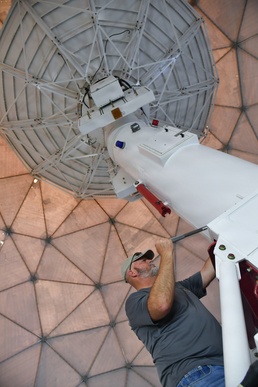
These transportable assets are essentially robust, deployable satellite dishes and mobile ground communication suites. They act as a crucial operational bridge, allowing 22 SOPS to temporarily replace or backfill static antenna capacity while the permanent infrastructure undergoes planned maintenance or modernizations.
"Our transportable assets act as a vital safety net for the Satellite Control Network," Van Grubb said. "By stepping in during infrastructure upgrades or repairs, we ensure a steady, reliable supply of satellite control support for Combatant Command campaign-level operations without missing a single beat."
Engineered for crisis and contingency response, the detachment is building a highly agile, rapidly deployable capability. Once deployed, personnel will operate self-contained, rugged antenna systems capable of establishing vital space links in virtually any environment on Earth.
"When a Combatant Command contingency scenario arises, agility is our greatest asset," Van Grubb said. "Our teams will be able to deploy to any location and execute the mission completely independently. We won’t need to rely on outside power or pre-existing communication paths; we will bring the capability directly to the fight."
Kirtland AFB serves as a critical multiplier for Detachment 9. By leveraging the installation's premier space research and rapid capabilities, the detachment ensures that combatant commanders maintain the seamless, resilient satellite communications required to execute joint operations worldwide.
Under Combat Forces Command’s Mission Delta 31, 22 SOPS helps secure the SCN and Position, Navigation, and Timing (PNT) infrastructure vital to national defense. To counter modern cyber and anti-satellite threats, Mission Delta 31 actively advances its capabilities, ensuring these essential space services remain robust and reliable for military and civil operations alike.