Soldiers with the Oregon National Guard's 102nd Civil Support Team wore fully enclosed hazardous materials suits while searching a mock village for a hidden radiological source during joint training at Camp Rilea, near Warrenton, Oregon.
The training brought together the Oregon National Guard, U.S. Coast Guard, and Astoria Fire Department to strengthen partnerships ahead of a real emergency involving hazardous materials or a potential weapons of mass destruction incident.
On the first day of field training at Camp Rilea, Soldiers and firefighters entered the Military Operations in Urban Terrain site wearing Level A hazardous materials suits. Using radiation detection equipment, they searched an abandoned housing complex for a simulated radioactive source. The scenario gave responders the opportunity to practice locating the hazard, sharing information, and working together during a complex emergency.
"This type of training is very important because this is part of our job," said Maj. Anthony Bernabo, nuclear medical science officer with the Oregon National Guard's 102nd Civil Support Team. "We have to be able to detect weapons of mass destruction, including radiological sources that could be used as weapons."
The four-day training event, conducted from Aug. 3-6, included classroom instruction, hands-on exercises and maritime operations. Participants learned about chemical, biological and radiological threats and then applied those skills in realistic scenarios.
"We're cross-training with the Civil Support Team and the state's hazardous materials response team," said Nolan Mathews, an engineer with the Astoria Fire Department. "If something big happens, we've already worked together."
Mathews said realistic training helps agencies prepare before an emergency occurs.
"You'd rather train for the worst-case scenario now than have something happen and try to figure it out," he said. "It's nice to have an idea of what you need to do and what resources are available."
He said working with military partners helps build trust before responding to a real emergency.
"It's awesome," Mathews said. "We've always had a great relationship with the National Guard and the Coast Guard. It's really cool to do civilian-military cross-training."
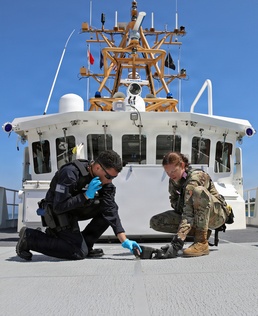
The training also moved to the Columbia River, where members of the Oregon National Guard's 102nd Civil Support Team joined U.S. Coast Guard boarding teams aboard the Coast Guard Cutter David Duren. Working together, they searched the vessel for a simulated radiological source while practicing radiation detection, shipboard search procedures, communications, and coordinated response in a maritime environment.
The exercise allowed both organizations to practice radiation detection, shipboard search procedures, communications, and coordinated response in a maritime environment.
"We're working with the Army's Civil Support Team to strengthen our partnership in chemical, biological, and weapons of mass destruction response," said Chief Warrant Officer Nick Gaines, supervisor of the U.S. Coast Guard Sector Columbia River Boarding Team. "As we strengthen our programs, it gives us more options to help protect the ports. If there's ever a threat to the Port of the Columbia River or anywhere else in our area of responsibility, we'll be better prepared to respond together."
Gaines said training with the Oregon National Guard gives both organizations a chance to improve how they work together before a real incident happens.
"It's been an amazing opportunity to see the experience the Army Civil Support Team brings," Gaines said. "We're able to work through communications challenges and continue striving for excellence as we operate in the maritime domain."
The training helped each agency better understand the others' equipment, skills and responsibilities. It also strengthened the relationships that are critical during emergencies.
"I want to thank our partner agencies and the other branches of service for these opportunities," Gaines said. "Working together helps us meet the mission and maintain the readiness we all strive for."
By training together in realistic scenarios on land and at sea, the Oregon National Guard, U.S. Coast Guard, and Astoria Fire Department strengthened their ability to respond to hazardous materials or radiological incidents that threaten Oregon's communities.