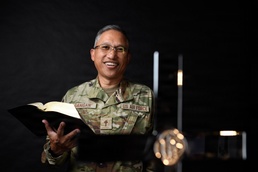
MARCH AIR RESERVE BASE, Calif. — The next time an Airman approaches a military chaplain, they may notice one important difference: instead of officer rank, the chaplain is wearing the symbol of their faith.
The change follows a Department of War policy announced in March 2026 directing military chaplains to replace visible officer rank insignia with their faith-group insignia on uniforms. While chaplains remain commissioned officers with the same authority and responsibilities, the update is designed to reduce barriers, reinforce confidentiality and strengthen their role as trusted sources of spiritual care, guidance and support.
For Chaplain Edward Ganigan, 163d Attack Wing, who is also a Major, the new insignia represents more than a uniform change—it reflects the heart of the chaplain's mission.
"The purpose of this change is to make us more approachable to our Airmen, widen our scope, and remove some of the intimidation that comes with rank," Ganigan said.
Approachability is central to the role chaplains play across the force. Whether sitting beside an Airman after receiving difficult news, counseling someone through personal struggles, or celebrating milestones such as promotions and retirements, chaplains are often present during many of the most meaningful moments of military life.
Beyond leading religious services, they serve as confidential counselors, spiritual leaders and trusted advisors, helping Airmen navigate personal challenges, ethical decisions and the everyday stresses of military service.
"Often, during Basic Military Training or while walking around base, you're dealing with the stressors of work and military life," Ganigan said. "Seeing someone wearing the symbol of your faith can be a great source of peace."
That sense of familiarity can help build relationships long before an Airman faces a difficult moment. Ganigan said establishing trust before a crisis, deployment, family emergency or other major life event allows chaplains to provide meaningful support when Airmen need it most.
That message resonated with Senior Airman Yolanda Panuco, assigned to the 163d Comptroller Flight, who believes the change may have the greatest impact on junior Airmen who could otherwise hesitate to approach a commissioned officer.
"For Airmen, I think being able to approach that chaplain without seeing a high rank is the biggest benefit," Panuco said. "Sometimes when you see the rank, you can get a little intimidated, especially if you have some personal stuff going on. You just want to see them as a person, not as someone who's above you in rank."
Although the insignia on the uniform has changed, the responsibilities of military chaplains have not. They continue to provide confidential counseling, advise commanders on matters involving religion and ethics, and support the overall readiness of the force. The updated insignia reflects the Chaplain Corps' continued commitment to building trust and strengthening connections—ensuring every Airman knows there is someone they can approach with confidence at every stage in their military journey.