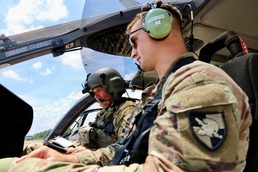
FORT RUCKER, Ala. — A select group of West Point cadets spent the week at Fort Rucker gaining an early, in-depth look at Army Aviation through a new developmental program aimed at preparing high-potential future leaders long before they reach the branching process.
Capt. Austin LaChance, the aviation branch representative at the U.S. Military Academy and officer in charge for the visit, said the trip is part of the academy’s growing Vanguard Initiative, a tactical development effort that gives selected cadets additional mentorship, resources and exposure to advanced military concepts.
This spring, West Point launched the first aviation-focused Vanguard cohort, selecting about 20 cadets for instruction in aviation fundamentals, planning and tactics. The Fort Rucker visit, formally titled the Army Aviation Future Leader Seminar, serves as an extension of that program for six cadets, including four rising sophomores and two rising juniors.
“These cadets are already sold on aviation,” LaChance said. “This week isn’t about recruiting. It’s about giving them advanced experiences and showing them what the branch will look like when they’re the ones leading it.”
The visit emphasized future force concepts, reflecting the fact that the cadets, members of the classes of 2028 and 2029, will likely attend flight school between 2028 and 2030 and serve into the 2040s. Activities during the trip focused engagements on emerging doctrine, future vertical lift capabilities, survivability, advanced rotary-wing tactics and talent management trends shaping the next generation of aviators.
Cadets also met with instructors, toured aviation facilities, and received hands-on exposure through simulators and aircraft orientations. They even participated in physical training with the commanding general, Maj. Gen. Clair Gill.
For many, the visit marked their first time inside an Army cockpit. Cadet Cameron Farmer a rising sophomore, said flying in a UH-60 Black Hawk for the first time was a defining moment.
“Being in the air, seeing everything from above, it’s incredible,” Farmer said. “Learning how aviation supports the infantry makes me want to be part of those mission sets.”
Cadet Quinn Michaud, also a rising sophomore, said meeting pilots and exploring multiple airframes helped him understand the branch’s breadth. “Getting to hear their experiences and see what each aircraft can do, it’s exciting,” Michaud said.
The cadets came away with new insights and a deeper appreciation for both the Army and Army Aviation. Cadet Xavier Smitte, a rising junior, noted the enduring relevance of the branch, especially in modern conflict environments.
“One of the biggest things I’m taking away is seeing that Army Aviation absolutely has a future, even in the age of unmanned aircraft systems,” Smitte said. “With everything happening in places like Ukraine, people sometimes question the survivability of manned aviation. But what we’ve seen here is that the Army is actively improving airframes and survivability. There is a future for aviation, even if people outside the branch don’t always see it.”
LaChance said the Aviation Vanguard Initiative is designed to identify and invest in cadets with strong potential for the branch. While none are guaranteed to commission into aviation, their selection reflects confidence in their future performance.
“Even if they go elsewhere, they’ll carry a deeper appreciation for a fellow combat arm,” LaChance said. “But we expect most will qualify. Giving them this exposure early helps them arrive ahead of their peers, and that makes the entire team better.”