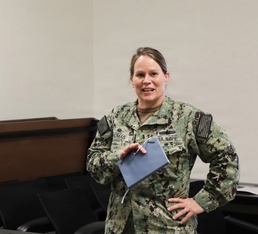
NORFOLK, Va. – In June, the Navy reestablished the Shore Intermediate Maintenance Activities (SIMA) in Norfolk and San Diego after more than 20 years with the goals of increasing enlisted technical expertise and improving the combat readiness of surface combatants, Capt. Megan Thomas, commanding officer of SIMA Norfolk, recently discussed the return, the command’s mission, Sailor technical development, and how intermediate-level maintenance supports fleet readiness and combat capability.
Why is bringing back Shore Intermediate Maintenance Activities so important for the Navy? The strategic environment has changed significantly since the original SIMAs were disestablished. Today’s Navy needs Sailors who can both operate and repair their equipment, particularly in contested environments where outside technical assistance may not be available. Re-establishing SIMA Norfolk helps restore Sailor self-sufficiency while improving the material readiness of the fleet.
What is SIMA’s primary mission? SIMA has two primary missions: increasing enlisted technical expertise through intermediate-level maintenance and improving the combat readiness of surface ships. By combining hands-on repairs with technical development, we strengthen both our Sailors and the fleet.
How does SIMA fit into the Navy’s overall maintenance enterprise? SIMA is one part of a larger maintenance team. Regional maintenance centers, public shipyards, industry partners and ships’ force all have critical roles. Depot-level maintenance remains essential, while SIMA focuses on intermediate-level repairs and technical development. Together, those efforts improve maintenance efficiency and help deliver combat-ready ships on schedule.
Why is Sailor self-sufficiency so important? Future conflicts may limit our ability to rely on outside technical support. Sailors must have the knowledge and confidence to diagnose and repair equipment at sea. SIMA Norfolk develops those skills primarily through hands-on maintenance, and mentorship from technical subject matter experts.
How does reestablishing SIMA Norfolk improve technical proficiency? Sailors assigned to SIMA Norfolk perform maintenance on operational equipment while rotating through multiple repair shops during their tour. Those rotations expose them to a broader range of systems and troubleshooting experiences than traditional assignments, producing more capable maintainers when they return to operational commands.
What role do fleet technical assistance providers at the regional maintenance centers play? We’re integrating fleet technical assistance more closely with repair activities so experienced technicians can mentor Sailors during actual maintenance. That partnership accelerates learning while improving repair quality.
How does SIMA improve fleet readiness? SIMA Norfolk provides a surge-capable maintenance force that can respond when ships experience unexpected equipment failures. Sailors and civilians work together to complete repairs quickly, helping ships meet maintenance milestones, training requirements and deployment schedules.
What does SIMA Norfolk provide to ships homeported here? We serve as a readiness partner by supplementing shipboard maintenance, providing technical expertise, assisting with repairs and helping close training gaps. We also work closely with Naval Surface Groups to identify fleet-wide maintenance trends and respond where we’re needed most.
How is today’s SIMA Norfolk different from the original organization? This is SIMA 2.0. While we retain the core mission of intermediate-level maintenance, we’re modernizing our approach by emphasizing technical development, structured training, advanced manufacturing and process improvement. The goal is to produce better maintainers while delivering greater readiness.
What role does advanced manufacturing play? Advanced manufacturing—including additive manufacturing, commonly known as 3D printing—is creating opportunities to produce certain parts more quickly when traditional supply chains cannot. As fleet technology evolves, manufacturing capability must evolve with it to support operational readiness.
What should Sailors expect when they report to SIMA Norfolk? Every Sailor completes a structured onboarding program that assesses their skills, develops an individualized training plan and prepares them to contribute immediately. Throughout their tour, they’ll rotate through repair shops, build technical expertise and document their qualifications so their follow-on commands understand the capabilities they bring back to the fleet.
What is the long-term vision for SIMA Norfolk? Our focus is continuous improvement. We’re evaluating where additional capacity and capability are needed, expanding the workforce deliberately and strengthening partnerships across the maintenance enterprise. Every adjustment is centered on developing Sailors and improving fleet readiness.
What would you say to Sailors considering orders to SIMA Norfolk? If you want to become a technical expert while directly contributing to combat readiness, SIMA is the place to be. You’ll build skills that benefit your career and help ensure our warships are ready when the nation calls.
Any final thoughts? Everything we do supports the warfighter. Our mission is to develop Sailors and deliver readiness so our ships can deploy with confidence in both their equipment and their people. That is the purpose behind bringing SIMA back—and why it matters to the future of the fleet.