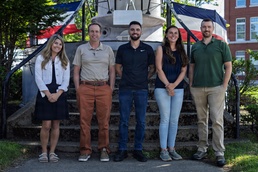
Just prior to the start of the fiscal year, Portsmouth Naval Shipyard’s nuclear engineering and planning office’s nuclear facilities division set out to deploy specialized state-of-the-art software to the deckplate by Independence Day — an expeditious move towards compressing shipment timelines and reducing operational strain.
The modernization effort began at a community of practice meeting, where members identified a critical operational hurdle: a lengthy administrative lead time for material shipments. Previously, the team relied on manual entry and disconnected tracking methods, which increased the potential for human error and created a lengthy cycle to finalize each shipment. This delay consumed vital planning resources and forced prolonged on-site storage, straining shipyard capacity.
A commercially available software, which is used by much of the private industry for similar shipping processes, was quickly identified as a solution for PNSY. "At the time, Pearl Harbor Naval Shipyard was actively working to obtain this technology, so discussions on whether it would benefit Portsmouth were already underway," said Jacob Gaudreau, acting nuclear facilities engineering division branch head. “It emerged as the logical choice for our site.”
Determined to transform how they work, the team took ownership of the initiative from the very beginning, utilizing this technology to turn a legacy process into a streamlined digital workflow designed to optimize speed, efficiency, and quality.
With a clear path forward, they immediately began the process of procuring the software and set Independence Day as their target implementation date. However, the project encountered critical administrative and procurement roadblocks threatening to delay completion by several months.
Rather than accepting the delay and missing the Fourth of July goal, the team pivoted. By operating with candor and challenging traditional timelines, the team collaborated with internal partners to complete the necessary technical setup and leveraged existing Defense Logistics Agency contracts to bring the solution online faster. “We held ourselves and our partners accountable, kept the timeline intact, and got the vendor on-site for training upon delivery,” said Gaudreau.
Achieving this milestone required seamless cross-departmental execution, proving that breaking down traditional organizational barriers is the fastest path to modernization. The technical execution was driven by a unified front of engineers and planning teams working collaboratively to implement the system. Business and administrative partners on the shipyard matched the technical push by accommodating a highly compressed review window to finalize the formal documentation outlining the team’s achievement.
At its core, the success of this initiative is defined by its bottom-up execution. The project began not as a directive from leadership, but as a “deckplate-driven” effort led by working-level personnel and first-line supervisors who identified a bottleneck and took ownership of the solution. This effort demonstrates how a workforce can leverage their respective expertise and authority to transform challenges into solutions that enhance efficiency, improve readiness and strengthen support to the fleet.
“Portsmouth Naval Shipyard is at its best when we apply grit and ingenuity to improve our performance,” said Stephen Fahey, nuclear engineering and planning manager and member of Senior Executive Service. “This special team demonstrated the shipyardcommander’s three lines of effort by applying expertise and utilizing their authority in providing innovation at the point of work.”