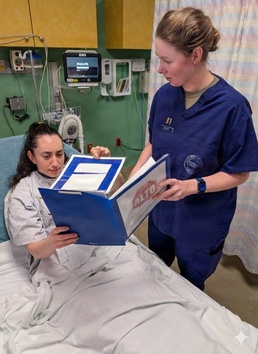
Uncertainty and anxiety often accompany patients waiting to undergo surgical procedure. For Capt. Ariel Miller, helping patients feel confident and informed of their procedure is as important as the clinical care they receive.
When Miller realized a Spanish-speaking patient preparing for surgery was struggling to understand what was happening, she stepped in without hesitation. She used her Spanish-language skills and clinical experience to guide the patient through every stage of care.
As the post-anesthesia care unit nurse manager at Joint Base Elmendorf-Richardson, Alaska, Miller prepares patients for surgery and monitors them as they recover from anesthesia.
“I have the opportunity to help patients during a very stressful day, and then either help them home, or transition to more long-term care,” Miller said.
Her commitment to patient-centered care earned her recognition as an Air Force Medical Service Trusted Care Hero.
Col. Angela Lacek, 673rd Surgical Operations Squadron Commander said Miller’s used her Spanish proficiency developed as a member of the Department of the Air Force's Language Enabled Airman Program, or LEAP, to provide reassurance throughout the surgical process.
She said Miller coordinated with the laboratory to expedite testing, remained with the patient from preoperative care through recovery, ensured certified medical interpreters completed the anesthesia consent process, and helped the patient and family understand what to expect before, during and after surgery.
Lacek said Miller's actions embodied the Trusted Care principles of high reliability, constancy of purpose, deference to expertise and respect for people.
According to Miller, high-quality patient care includes clear communication and compassion.
“My goal was simply to help the patient however I could,” she added. “I know how uncomfortable it can be when you do not speak a language well, and I cannot imagine having surgery when no one can communicate with you and vice versa.”
LEAP develops Airmen and Guardians with language, regional expertise and cultural capabilities. Miller said through the program she served as an interpreter during the 2024 Central American and Caribbean Air Chiefs Conference before attending the Inter-American Squadron Officer Course, where she trained alongside officers from partner nations in Spanish.
“This conference was a wonderful diplomatic opportunity and is one of the highlights of my time in the Air Force,” Miller said. “I was able to improve upon my Spanish, but more importantly, I strengthened relationships with our foreign partner nations.”
Today, teammates regularly ask Miller to assist when Spanish-speaking patients need help communicating before or after surgery.
“As a provider, LEAP has been beneficial by encouraging me and helping me to utilize my language abilities and connect better with my patients,” she said.
Miller credits much of her approach to nurses who showed her that even small acts of compassion can make a lasting difference for patients facing difficult recoveries. Their example continues to shape how she cares for others and leads her team.