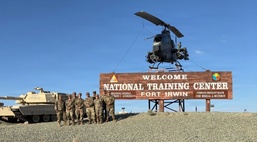
Soldiers assigned to the Army Reserve’s 304th Cyber Battalion provided cyber operations support to the Joint Modernization Command exercise control network during Project Convergence Capstone 6 at Fort Irwin, California, from July 6-29, 2026.
Project Convergence Capstone 6, also known as PCC6, is the Army’s premier modernization experiment. The large-scale event brings together Army, joint and multinational participants to test emerging capabilities and learn how people, equipment and new technologies can work together in a fast-paced operational environment.
During the mission, battalion personnel conducted defensive cyber operations to protect the exercise’s control network (EXCON) and the unique virtual machine environment (VME) connected to the exercise’s tactical SIPR network. Their work included cyber hunt activities focused on identifying suspicious network behavior and reviewing potential indicators of malicious activity.
The complexity of PCC6 provided the battalion with a valuable new environment to practice those skills. Soldiers had to understand how the exercise network operated while remaining prepared to identify activity that could affect the mission.
“Supporting tactical SIPR network gave our Soldiers an opportunity to conduct cyber operations in a new, unique environment,” said Chief Warrant Officer 3 Giovanni Vela, senior tech lead assigned to the 304th Cyber Battalion. “Our responsibility was to help protect the network, so exercise personnel could continue coordinating and executing the mission.”
The battalion’s support enabled a larger Army effort to experiment with technologies and processes that may shape future military operations. The mission also gave Army Reserve cyber Soldiers experience working alongside active-duty, joint and civilian mission partners supporting one of the Army’s largest modernization efforts. 304th Cyber Battalion personnel help preserve the availability and integrity of those networks so commanders and exercise participants can continue communicating and sharing information.
“This exercise demonstrated the importance of cybersecurity collaboration among multiple service branches, units and partner nations working toward a common modernization goal,” said Sgt. 1st Class Breanna Castro-Flores. “This joint and combined effort strengthens our collective capabilities across every domain.”
The 304th Cyber Battalion’s support to the Joint Modernization Command network demonstrated how Army Reserve cyber forces can contribute to joint experimentation and Army modernization. By conducting cyber defensive activities and supporting the exercise, the battalion helped maintain the digital foundation needed for future efforts and prepare for the demands of future conflict.