By Heather Douglas, Capability Program Executive Aviation
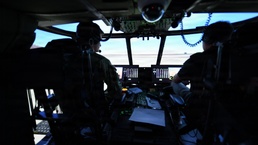
The Project Office for the Future Long Range Assault Aircraft (FLRAA) executed a critical design iteration of the Army’s next-generation assault aircraft, the MV-75 Cheyenne, at Redstone Arsenal, Alabama during a Special User Evaluation (SUE). Over the course of a week in mid-May, a diverse team of operators from the 101st Combat Aviation Brigade (CAB), engineers, and trainers gathered to focus on a critical aspect of modern aviation: the pilot display system and its impact on cognitive workload.
The Project Office for the Future Long Range Assault Aircraft (FLRAA) executed a critical design iteration of the Army’s next-generation assault aircraft, the MV-75 Cheyenne, at Redstone Arsenal, Alabama during a Special User Evaluation (SUE). Over the course of a week in mid-May, a diverse team of operators from the 101st Combat Aviation Brigade (CAB), engineers, and trainers gathered to focus on a critical aspect of modern aviation: the pilot display system and its impact on cognitive workload.
Welcoming the group, COL Jeffrey Poquette, Project Manager for FLRAA, highlighted the unique capabilities this new assault tiltrotor will bring to the battlefield. He emphasized that the insights gathered during this intensive week-long session will directly inform the detailed design of the MV-75 Cheyenne and will shape decisions leading up to the first flight and eventual delivery to the 101st Airborne Division.
A Collaborative, Operator-Focused Approach
This was not just a technical exercise - it was a collaborative effort designed to put operators at the center of the design process. Leading the effort was Tia Larsen-Calcano, a Human Factors Engineer in PM FLRAA, and MAJ Craig Hunninghake, FLRAA Assistant Program Manager. Participants included pilots and crew from the 101st Airborne Division, subject matter experts from the Army Aviation Center of Excellence/Operational Test Directorate, and representatives from the U.S. Army Special Operations Aviation Command, and the Army’s Aviation Flight Test Directorate. This cross-functional team structure ensured that the evaluation captured a wide range of operational perspectives, from those who will fly and fight in the MV-75 to those responsible for training, testing, and integrating the aircraft into Army formations.
Critical to this evaluation was the APEX2 lab from the U.S. Army’s Combat Capabilities Development Command. This office specializes in hardware and software rapid prototyping, and human factors-based evaluation of the Aircrew Vehicle Interface (AVI).
“The team at APEX2 quickly integrated a tiltrotor flight and avionics model using existing laboratory assets and software baselines from other platforms,” said Hunninghake. “Their ability to capture user feedback, update design concepts with user recommendations overnight, and fly the participants ‘dream data set’ all within a single week is unmatched. This empowered the operators to actively participate in the design and evaluation of the avionics that they will one day fly.”
CW2 Julian Dilg, a UH-60 pilot, noted “The displays are inherently different, so we were able to work together and bounce ideas off of each other and gain insight.”
CW2 Jordan Brooks, a CH-47 pilot, added, “Sharing those insights gave us the ability to find enough common ground to work with in order to decide what changes needed to be made to display the information needed to fly it most effectively.”
Pilot Display System: Reducing Cognitive Load, Enhancing Performance
A central focus of the SUE was the pilot display system. The digital interface provides aviators with critical flight, navigation, and mission data. As the Army transitions to the advanced tiltrotor MV-75 Cheyenne, the complexity and speed of operations demand a display that not only presents information clearly but also minimizes cognitive workload.
Throughout the evaluation, pilots from the 101st and other organizations performed a series of simulated missions and scenarios. They provided real-time feedback on the intuitiveness of the display, the clarity of alerts and warnings, and the ease of accessing key data such as power applied versus power available, a crucial metric for tiltrotor performance and safety.
Operators highlighted the importance of being able to quickly interpret engine and power management data, especially during high-stress maneuvers or degraded visual environments. The evaluation team paid close attention to how information was prioritized and layered on the display, seeking to avoid information overload while ensuring that no critical cues were missed.
When asked what had the most meaningful impact on the entire team during the week, Dilg and Brooks emphasized, “We knew that it wasn't just a check-the-box exercise. The entire team made us all feel valued and they really appreciated the input that we provided. We were happy to provide the input, but we were impressed at the way the team seemed to appreciate the work we put into this week.”
Both pilots agreed that flying the MV-75 Cheyenne Virtual Prototype on the first day before they began evaluating the data sets familiarized them with the new aircraft, which was extremely helpful.
Informing Detailed Design and First Flight Decisions
The feedback from the SUE is already shaping the detailed design of the MV-75’s cockpit. Engineers from Bell and Army program offices are incorporating operator recommendations to refine display symbology, streamline menu navigation, and enhance alerting logic. For example, several pilots noted that grouping power management data with related performance cues reduced the time needed to make critical decisions, directly supporting safer and more effective operations.
These operator-driven insights are not just academic, they inform key decisions ahead of the MV-75’s first flight. By validating display concepts and workload management strategies early, the program reduces risk and increases the likelihood of a successful test campaign and smooth transition to operational units.
Preparing for the Future
The collaborative approach of the SUE - bringing together operators, testers, engineers, and trainers - demonstrates the Army’s commitment to fielding an aircraft that meets the real-world needs of its aviators. By focusing on the pilot display system and cognitive workload, the FLRAA program is setting the stage for a safer, more effective, and more user-friendly MV-75 Cheyenne, ready to serve the 101st and the broader Army aviation community for decades to come.