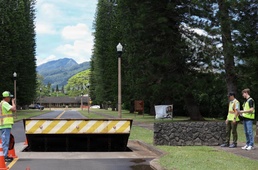
OAHU, Hawaii — A series of site visits gave Army security leaders and U.S. Army Engineering and Support Center, Huntsville project teams a firsthand look at major improvements to installation access control systems across the island.
Representatives from the U.S. Army Installation Management Command joined engineers and project managers from the Huntsville Center to evaluate upgraded barrier systems and review the long-term success of a two-year modernization effort.
The work was completed through Huntsville Center’s Access Control Points program, which supports reliable barriers and security measures at entry control points, including gates into military installations. The program helps protect personnel, facilities and resources while ensuring installations can continue mission-critical operations.
Over the past two years, the ACP team led restoration and modernization efforts to improve barrier systems at installations across the island. The team developed and implemented a comprehensive restoration plan aimed at strengthening long-term reliability, sustainment and operational readiness.
According to a contractor report, the barriers are now listed as successfully operating at a substantially increased rate, marking improvements in installation security readiness and daily operational capability.
Shannon Webb, Huntsville Center ACP project manager, said the results reflect the strength of the partnership among engineers, contractors and Army stakeholders.
“When the project began, many of the systems had experienced significant wear,” Webb described. “This upgrade is a significant accomplishment and demonstrates what can happen when organizations work together toward a shared mission.”
The barrier systems are a critical component of installation access control, helping regulate vehicle entry points and protect personnel, facilities and resources.
Project leaders said the site visits allowed stakeholders to observe the systems in operation and assess the system as a whole.
“The absolute reliability of our installation barriers should be cornerstone of our physical security architecture,” said Shawn Stackhouse, a physical security specialist under the Directorate of Emergency Services with Installation Management Command, noting that barrier systems are a key part of installation protection.
“By implementing rigorous maintenance standards, we have significantly enhanced system reliability, ensuring our defenses remain operable,” he said.
The effort also included upgrades designed to modernize and strengthen overall security. Over the course of the project, several guard booths were replaced, and new red and blue lighting systems were installed at key locations.
“Safety and security protocols cannot remain static; they must evolve to counter modern physical threats, such as high-velocity vehicle-ramming attacks,” Stackhouse added. The lighting upgrades are designed to improve visibility for both security personnel and drivers entering the installation.
Stackhouse elaborated on the critical need for enhancements, “Upgrading infrastructure drastically reduces human error and decreases response times during a security incident.”
Webb said the project was never just about restoring equipment. It was about building a system that can be maintained, trusted and relied on well into the future.
“Our goal was not simply to repair equipment, but to create a sustainable maintenance approach that keeps these systems functioning at a high level well into the future,” she explained. “The results we’re seeing now are a direct reflection of consistent teamwork, accountability and investment in installation security.”