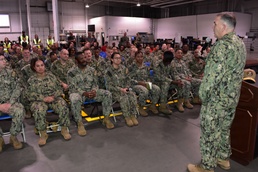
Rear Adm. Matthew Case, acting Navy Surgeon General and acting chief, U.S. Navy Bureau of Medicine and Surgery, visited Naval Medical Readiness Logistics Command (NMRLC) to highlight the command’s vital role in delivering, equipping and sustaining ready naval medical forces, July 14.
The visit focused on how NMRLC’s global logistics and expeditionary outfitting serve as the essential backbone required to sustain battle-ready forces, enabling highly mobile medical care and critical medical supplies to move with the fleet as the Navy transitions toward distributed maritime operations.
“We must remain highly flexible, ensuring we can project power and medical support wherever the mission demands,” said Case.
NMRLC meets those demands by designing, procuring, and sustaining robust, reliable expeditionary medical platforms that are in high demand globally. From localized operational commands to joint exercises in Europe and the Indo-Pacific, NMRLC ensures that specialized, tailored medical teams have the exact systems required for the fight. Within this framework, delivering integrated expeditionary medical systems represents the bedrock of NMRLC’s core mission.
Case emphasized that while administrative processes are continuously streamlined, the enterprise’s central focus remains locked onto delivering ready forces and medical systems to the fleet.
“Our leadership team is continuously working to strip away administrative burdens and streamline our processes, but our fundamental focus must never waver,” Case emphasized. “Our 'North Star' is simple: we are here to deliver ready medical forces and robust expeditionary medical systems to the fleet. Every administrative adjustment we make is designed to keep our eyes locked onto that singular, vital objective.”
This focus is directly linked to the operational objectives of the Chief of Naval Operations, the Secretary of the Navy, and the National Defense Strategy. Modernizing medical logistics infrastructure enhances the Navy’s ability to field and sustain expeditionary medical capability in future contested environments, directly supporting the surgeon general’s vision for the naval medical force 2045.
During an all hands call, Case addressed the critical strategic decisions involved in deploying these assets, noting that prepositioning in specific geographic areas involves a calculated trade-off between immediate regional availability and transit timelines to alternative theaters. He also noted that highly impactful operational guidance often originates from junior personnel, such as experienced hospital corpsmen, emphasizing a culture where team members receive necessary, candid feedback rather than comfortable assurances.
The visit included the formal recognition of key personnel driving the command’s $25 million warehouse modernization initiative and managing the logistics of $560 million in expeditionary medical assets across global locations.
“The scale of what is managed here is truly remarkable, but what makes it work is the people,” Case concluded. “Whether you are a logistics specialist, an optical technician, or a material handler working in the warehouses, your dedication directly impacts our global readiness and saves lives on the front line.”
NMRLC develops, acquires, produces, sustains, and ensures enduring lifecycle support of medical materiel solutions to the Fleet, Fleet Marine Force, and Joint Forces in high end competition, crisis, and combat.
Navy Medicine's 44,000+ talented and ready forces optimize health readiness, deliver quality healthcare, and provide global expeditionary medical support to warfighters.