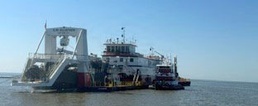
MOBILE, Ala. — Mobile Bay is more than just a beautiful body of water; it is a vital natural estuary and the undeniable economic heartbeat of Alabama. Serving as the endpoint for the sixth-largest river system in the United States, the Bay is a dynamic environment, constantly shaped by the powerful forces of nature. For thousands of years, our river systems have carried naturally occurring sediment down into this estuary.
Today, this ongoing natural process presents us with a monumental responsibility: ensuring a safe, efficient navigation channel while simultaneously preserving the health of our coastal ecosystem. The core conversation surrounding our waterways often misses a fundamental truth.
The real question isn't whether sediment belongs in Mobile Bay—it absolutely does. The question is how we manage that naturally occurring sediment to support both safe navigation and a resilient, flourishing environment.
To truly understand the scope of this responsibility, consider the sheer volume of material involved. Each year, the U.S. Army Corps of Engineers (USACE) manages approximately 6 million cubic yards of sediment dredged from Mobile Harbor, including about 4 million cubic yards from the Bay Channel. At that scale, the material could cover four football fields to nearly the height of the RSA Tower in downtown Mobile.
Managing this immense volume requires a strategy that is environmentally responsible, economically sound, and scientifically proven. Because there is no single, one-size-fits-all solution, sediment is managed through a highly regulated, adaptive process.
For Mobile Bay, Thin Layer Placement is beneficial use under USACE’s national regional sediment management framework. It is one way we intentionally keep compatible sediment within the estuary, so natural tides and currents can continue moving it through the system. Other available options include confined upland placement, the Sand Island Beneficial Use Area and the Ocean Dredged Material Disposal Site. No single option is appropriate for all of this material. Some retain sediment within the Bay, while others isolate it or remove it from the estuary.
Together these options allow USACE to match the placement method to the sediment, environmental conditions and operational need.
In public discourse, Thin Layer Placement is sometimes called “mud dumping.” We understand why that phrase attracts attention, but it does not accurately describe the controlled, monitored and science-based process that is being used. What we are actually doing is intentionally managing the natural sediment that built Mobile Bay and the Gulf Coast.
From 1986 through 2011, maintaining the Mobile Harbor Navigation Project generally meant removing more than 4 million cubic yards of maintenance material from Mobile Bay each year and placing it at an offshore disposal site. A comprehensive sediment-budget study later raised an important question about that approach.
Maintenance dredging was removing more sediment from the Bay system than natural river inputs were supplying to the navigation channel. Continuing to treat that sediment solely as material to be removed risked creating a long-term deficit within the estuary.
Simply put, Mobile Bay needed more of its sediment to remain within the natural system.
This revelation sparked extensive collaboration among federal agencies, state leaders, and local scientists. Through monitoring and hydrodynamic modeling, experts found that material placed through Thin Layer Placement did not move along the bottom as one large mass. Instead, waves and currents gradually remobilized the material into the water column and returned it to the Bay’s natural sediment transport system. The process is engineered and closely monitored. Sediment is generally placed in layers between 6 and 12 inches thick at approved locations selected through environmental review. Placement areas are managed and rotated to allow the Bay bottom and its biological communities time to recover.
Science is an evolving process, and so is our management strategy. We recognize that the future of Mobile Bay relies on maximizing the environmental utility of every grain of sand and silt we move. The State of Alabama’s recent enactment of the "Save Our Bay" legislation marks a new chapter in these operations. The law establishes a 70% beneficial-use requirement for qualifying coastal dredging operations when federal funding and permitted sites with sufficient capacity are available. It also uses a narrower statutory definition of beneficial use, under which routine placement into public waters does not count unless it is part of shoreline restoration or marsh creation.
USACE has historically and continues to work with state leaders, the Alabama Department of Environmental Management (ADEM), and local partners to expand those opportunities. Together, we are looking for ways to use suitable sediment to rebuild shorelines, restore wetlands and strengthen coastal resilience while continuing to maintain a safe navigation channel.
This work is never conducted in a vacuum. Dredging and placement activities undergo environmental review and coordination under applicable federal laws, state and federal certifications and consultation requirements. USACE works with ADEM and federal resource agencies to ensure operations comply with applicable water-quality and habitat protections.
Mobile Bay has always been shaped by rivers, tides and sediment. Our responsibility is to manage those natural processes using the best available science so the Bay remains both an economic engine and one of America’s most important estuaries for generations to come.