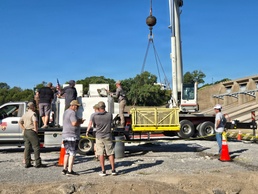
TULSA, Okla. – Words like stilling basin and dewatering are not terms most people use in everyday conversations; for the U.S. Army Corps of Engineers, Tulsa District, they represent an important part of maintaining the district’s infrastructure. At Canton Lake, crews recently dewatered the stilling basin, the reinforced concrete structure below the dam’s outlet works, to inspect areas that are normally submerged and help ensure the dam continues to operate safely and reliably for the communities it protects.
Most visitors to Canton Lake may never think about what lies below the water at the bottom of the dam. Hidden beneath the water during normal operations, the stilling basin remains out of sight until water is removed during inspections like this, offering a rare and temporary glimpse of what lies beneath.
“The stilling basin plays a critical role in the dam’s operation,” said Eric Bonnell, northern area operations project manager, USACE, Tulsa District. “Water released through the gates can travel at extremely high speeds. The concrete basin is designed to slow water before it enters the river downstream, reducing the water’s energy and helping prevent erosion that could damage the dam’s foundation or the river channel.”
Dewatering a stilling basin is similar to draining a swimming pool to inspect for worn areas or other damage hiding beneath the waterline.
The dewatering process at Canton began on Friday, July 3, when crews used a 10-inch pump and a 6-inch pump to remove water from the stilling basin and discharge it into the river channel.
Before crews could fully dewater the basin, USACE personnel and Oklahoma Department of Wildlife Conservation staff worked together to relocate the remaining fish.
“Utilizing the pumps helped lower the water to a manageable level over the weekend,” said Nikisha Cook, assistant lake manager, Canton Lake, USACE, Tulsa District. “On Monday, ODWC staff joined us to help remove fish from the remaining water and relocate them upstream.”
Once the rest of the water was removed, years of silt and sludge coated the stilling basin floor. Before inspections could begin, crews faced the slow, messy and hot process of removing the thick sediment.
“Working in an exposed concrete structure during the summer heat presented challenges,” said Cook. "We are fortunate to have a volunteer who is also a certified emergency medical technician. Having that additional medical expertise on site provided another layer of protection for everyone involved and gave us added peace of mind while the crews worked in the heat.”
Crews first gathered the heavy sediment into piles using heavy equipment before loading it into a dump truck and transporting it to a disposal area on USACE property.
With the sediment removed, engineers could access portions of the stilling basin that are normally submerged. Exposing the concrete allowed inspectors to conduct a visual and hands-on inspection of the structure and identify areas that may require maintenance or further evaluation.
“During inspection, I use a hammer to check the soundness of the concrete,” said Eric Meyer, project lead, dam and levee safety, USACE, Tulsa District. “I am looking for any spalling, cracking, exposed rebar or deficiencies in the concrete within the stilling basin.”
Spalling, the breaking, chipping or peeling of the concrete surface, occurs when the outer layer of the concrete deteriorates, exposing the underlying material. This can range from small, shallow patches to larger sections where concrete chunks break away.
Once the basin is dewatered, engineers inspect the structure for:
· Cracks in the concrete · Concrete worn away by years of flowing water · Deteriorated joints · Signs that maintenance or repairs may be needed
Using a hammer, Meyer taps the concrete surface and listens for changes in sound that could indicate a hidden void beneath or behind the slab. Solid concrete produces a distinctly different sound than concrete with an underlying void.
While small areas of deterioration are not always a structural concern, they can indicate conditions that warrant future repairs. Documenting these conditions in the inspection report helps engineers plan future maintenance needs and address issues before they become significant.
"We have not found anything of major concern during this inspection," said Meyer. "That's the outcome we want.”
These inspections help engineers make informed maintenance decisions by identifying potential issues before they become significant.
While most visitors to Canton Lake will never see the stilling basin or the work that goes into maintaining it, inspections like this ensure the dam remains ready to protect people, communities and businesses downstream. From the 16 tainter gates to the outlet works and auxiliary spillway, every component of the project plays an important role in managing floodwaters. Through proactive inspections and preventive maintenance, Tulsa District engineers help ensure Canton Dam continues to operate safely and reliably for the people who depend on it.