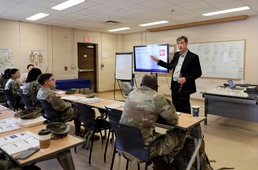
CAMP HUMPHREYS, South Korea — Brian D. Allgood Army Community Hospital (BDAACH), in partnership with STERIS University and the Defense Health Agency (DHA), hosted a four-day Sterile Processing and Endoscope Reprocessing Excellence Workshop June 9–12, strengthening infection prevention practices, standardizing instrument reprocessing, and enhancing medical readiness across the Indo-Pacific Military Health System.
The first workshop of its kind held in Korea brought together Army, Navy, and Air Force healthcare professionals from military medical and dental treatment facilities across South Korea, Japan, and Guam for expert-led instruction and hands-on training in surgical and dental instrument reprocessing, flexible endoscope reprocessing, and high-level disinfection (HLD).
Standardized sterile processing and endoscope reprocessing practices are essential to preventing healthcare-associated infections, protecting patients, and ensuring military medical teams remain ready to deliver safe, high-quality care in both garrison and operational environments.
U.S. Army Lt. Col. Angela Howell, chief of perioperative nursing services at BDAACH and the workshop's lead organizer, said the event was designed to strengthen infection prevention by providing healthcare professionals with the knowledge and practical skills needed to consistently apply evidence-based sterilization and HLD practices.
"Hosting the STERIS University workshop gave us an important opportunity to strengthen infection prevention practices by providing our Soldiers, Sailors, Airmen, and civilian healthcare professionals with evidence-based education and hands-on training," Howell said. "Combining expert instruction with practical experience helped bridge the gap between theory and everyday clinical practice, giving participants the confidence and skills to consistently apply best practices in sterilization and high-level disinfection."
Attendees completed two specialized training tracks covering instrument management systems, cleaning science, sterilization methods, sterility assurance, ANSI/AAMI ST108 water quality standards, flexible endoscope microbiology, ANSI/AAMI ST91 implementation, cross-contamination prevention, and hands-on automated endoscope reprocessor (AER) training.
During a recognition ceremony, U.S. Army Col. Christopher Stucky, acting director of BDAACH and acting commander of Medical Department Activity-Korea and the 549th Hospital Center, thanked the STERIS University instructors for bringing world-class training directly to military healthcare professionals stationed overseas.
"I don't think you guys realize the education that you're getting here," Stucky said. "We have STERIS University come to Uniformed Services University every year, and we typically TDY (temporarily assign) people from bases all throughout the United States to receive this training. For them to come here and provide this to us is such an added benefit."
Drawing on his experience as a perioperative nurse and former enlisted surgical technologist, Stucky also emphasized the critical role sterile processing professionals play in patient safety.
"People thought that (Sterile Processing Department)...was like washing dishes," he said. "But this is really a complex thing that impacts healthcare quality, safety, and the care that we provide to people. It's very serious, and this is really a complex job."
Participant feedback was overwhelmingly positive, with many recommending the workshop become an annual event. Howell said the workshop's success extended well beyond continuing education credits.
"Success for this workshop meant more than completing a course or earning a certificate," Howell said. "It meant building a workforce that is better equipped to protect patients, improve operational efficiency, maintain compliance with healthcare standards, and reduce unnecessary costs to the organization. By investing in the education and development of our service members and civilians, we are investing in safer patient care and stronger healthcare outcomes across the Indo-Pacific."
BDAACH plans to continue its partnership with STERIS University to expand future training opportunities and further strengthen sterile processing standards, infection prevention, patient safety, and medical readiness throughout Army Medicine in Korea and the Indo-Pacific.