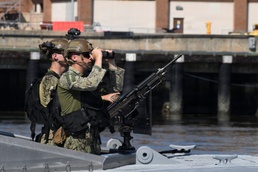
Located on Georgia's southeastern coast, Naval Submarine Base Kings Bay serves as the Atlantic homeport for the Navy's Ohio-class ballistic missile submarines and is home to Strategic Weapons Facility Atlantic (SWFLANT).
SWFLANT operates with a joint force of Marines and Sailors from Marine Corps Security Force Battalion Kings Bay (MCSFBn). With MCSFBn support, SWFLANT provides safe, secure, and reliable sea-based strategic deterrence assets to the Ohio-class submarines of Submarine Group 10. Together, this team forms a cornerstone of American strategic stability, supporting the sea-based leg of the nuclear triad.
Charged with the task of safeguarding and preventing unauthorized access to these strategic assets, Marines and Sailors assigned to MCSFBn operate around the clock. They create overlapping layers of land and water security, ensuring constant readiness for the submarines, personnel, and infrastructure ashore.
The security force primarily consists of Sailors from the Navy’s master-at-arms rate, known as MAs, and Marines from combat arms military occupational specialties. Nearly 10 percent of all MAs in the Navy serve at MCSFBns in Kings Bay, Georgia, and Bangor, Washington, protecting the Navy’s strategic deterrent mission. MCSFBns are unique units where Sailors and Marines operate under a single, unified Marine commanding officer.
Vigilance Twenty-Four Hours a Day, Seven Days a Week This vital defense is maintained without pause. Whether patrolling the harbor aboard security boats, monitoring the waterfront from observation towers, conducting tactical training, or preparing for potential contingencies, these service members stand a tireless watch, providing the overlapping layers of security required to keep the mission secure.
For many service members, the significance of that mission is not fully understood until they arrive. U.S. Marine Corps Sgt. Andres Escobar recalled having limited knowledge of the ballistic missile submarine mission before receiving orders to Kings Bay. Through training, daily operations, and mentorship from senior leaders, he gained a deeper appreciation for the role Marines and Sailors play in supporting national security.
"The mission never stops," Escobar said. "The base operates 24 hours a day, seven days a week, and there is so much more involved than most people realize."
That understanding begins with the Personnel Reliability Program. As members of the program, Marines and Sailors entrusted with protecting the nation's most sensitive assets are held to exceptionally high standards of professionalism, accountability, and readiness.
Escobar said leaders take time to explain not only what the mission is, but why it matters. Understanding the purpose behind the mission gives many service members greater appreciation for their role in supporting national security.
Supporting the sea-based leg of the nuclear triad is not simply another assignment. It is an opportunity to contribute directly to a mission whose impact reaches far beyond the waterfront.
Harbor Patrol: Security on the Water Harbor patrol Sailors provide one of the many layers of security supporting the mission.
Serving as part of the harbor patrol force, master-at-arms Sailors maintain a constant presence throughout the waterways surrounding Kings Bay. Rain or shine, day or night, harbor patrol crews stand watch to help ensure the security and readiness of the installation. At any given time, multiple patrol boats operate throughout the harbor, maintaining a visible security presence and supporting the overall mission.
Though harbor patrol units exist throughout the Navy, Sailors noted that Kings Bay is unique because of the role it plays in supporting the submarine force.
Many of the Sailors interviewed described choosing waterfront operations over more traditional law enforcement assignments. While some master-at-arms serve in conventional installation security roles, those assigned to harbor patrol gain a direct connection to the mission unfolding around them each day.
That connection creates a strong sense of pride.
Master-at-Arms 1st Class Austen Davis explained that while the work often involves long hours, routine patrols, and extended periods of watchstanding, Sailors understand the significance of what they are protecting. That understanding provides purpose and reinforces the importance of every patrol, watch, and qualification.
Several Sailors described the assignment as an opportunity to contribute to something larger than themselves.
Master-at-Arms 2nd Class Dustin Pennington emphasized that harbor security serves as an essential component of the broader mission. The effectiveness of ballistic missile submarines depends on the people, infrastructure, and security forces that support them ashore. Every day, Sailors on the waterfront help ensure those assets remain secure, ready, and capable of carrying out their mission if called upon.
"The mission has to be done," Pennington said. "It's essential."
Marines Ashore: Land-Based Protection Marines provide a complementary layer of security ashore. Throughout the installation, they maintain security positions, monitor waterfront activity, conduct training, and prepare for potential contingencies. Posts provide multiple layers of awareness and communication, allowing Marines and Sailors to maintain a common operational picture across the waterfront.
Marines rotate between operational duties, administrative responsibilities, and intensive training periods where they continue refining infantry skills and preparing for a wide range of scenarios. Working alongside Sailors is one of the distinct aspects of the Kings Bay assignment. Escobar highlighted the opportunity to learn different procedures and gain exposure to capabilities they would not typically encounter elsewhere in the Marine Corps.
"Working alongside the Sailors gives us opportunities we wouldn't normally get elsewhere," he said. The experience broadens perspectives, strengthens interoperability, and reinforces the understanding that maintaining the nation's strategic capabilities is a team effort.
Joint Interoperability and Trust That partnership between the Sailors and Marines of Marine Corps Security Force Battalion represents a premier example of joint integration. While Sailors provide security on the water, Marines provide land-based protection, maintain observation of the waterfront, and stand ready to respond alongside their Navy counterparts when required. Together, they create overlapping layers of security designed to protect SWFLANT's infrastructure, the base, and preserve mission readiness.
Long hours, demanding schedules, and shared responsibility help build trust between Marines and Sailors supporting the mission.
Small watch teams foster trust, accountability, and teamwork. Service members learn each other's strengths, develop confidence in one another's abilities, and build the relationships necessary to execute a mission where there is no room for complacency.
That trust, combined with rigorous training and a clear understanding of the mission's purpose, reinforces a common theme heard throughout the waterfront community: readiness. Whether standing watch from a post overlooking the harbor, patrolling the waterways aboard a security boat, or preparing for potential contingencies, every Marine and Sailor understands the importance of being ready when called upon.
For many, Kings Bay begins as an unfamiliar assignment. Through long hours on watch, demanding training schedules, and a deeper understanding of the mission they support, it becomes something more: an opportunity to contribute directly to national security and the readiness of the nation's strategic force. Strategic deterrence may ultimately rest aboard submarines operating far from shore, but at Kings Bay, that mission begins long before a submarine gets underway. It begins with the Marines standing watch from the shoreline, the Sailors patrolling the harbor, and the shared commitment of both services to protect SWFLANT and the strategic assets vital to national security.
Together, they provide the readiness, vigilance, and trust that allow the sea-based leg of the nuclear triad to remain a credible and survivable component of the nation's nuclear enterprise.
Submarine Group Ten is the nation's preeminent provider of sea based strategic deterrence, Tomahawk Land Attack Missile strikes, and unique submarine based special operations capabilities. The base is home to all east coast Ohio class submarines.
For more news from Commander Submarine Group 10, visit the official Navy website and our command Facebook page.