The months from May through early September are known as the 101 days of summer, and for many Marines, civilians, and families these months mark a time of activities, off-duty periods, and outdoor fun. Aboard Marine Corps Logistics Base Barstow, California, and throughout the surrounding desert, summer brings scorching temperatures and an increased risk of heat-related injuries and illnesses.
Any improper heat related mistakes like the lack of acclimatization make individuals more susceptible to heat-related illnesses such as heat exhaustion, heat stroke, and dehydration. There are various ways to mitigate heat related injuries and illness. Fire Chief Ryan Tworek, with fire and emergency services explained how he and the FES team work together in mitigating the heat to perform on demand.
“Operating in a hot, dry desert environment demands a hyper-vigilant approach to heat mitigation. At emergencies we implement work-rest cycles to allow crews doff their heavy PPE to cool down and hydrate. We have also obtained CoolMitt devices to cool the palms of responders providing systemic core temperature cooling,” Tworek said.
Aside from humans, animals’ tolerance to heat differs based on their size, body condition, coat type, health status, and other factors. The American Veterinary Medical Association suggests avoiding the hottest part of the day when taking dogs on walks during warm weather.
“Brachycephalic (short-nosed) and overweight dogs seem to have a tougher time than others in hot weather and may require more frequent rests, shorter walks, or a change in walk schedule to avoid the hottest hours of the day. In general, if you’re warm, the dog likely is much warmer.”
It is important to know your pet and recognize the signs of heat stress. Researchers at the AVMA state that signs of heat exhaustion in dogs may include “unexpected anxiety or weakness, being less responsive than usual, heavy or frequent panting, excessive drooling, and discolored, dry, and/or sticky gums.”
Similarly, humans are highly susceptible to heat-related illnesses and must take precautionary measures to remain healthy and hydrated. MCLB Barstow and Base Safety Office personnel have systems in place to protect Marines, civilians, and families from heat-related injuries and illnesses.
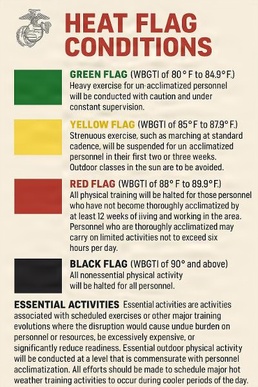
“The 101 Days of Summer Safety Standdown, active tracking of heat flag conditions, heat safety banners posted throughout the base, and recurring training that takes place not only during the summer months but also throughout the cooler parts of the year are some of the systems in place today,” Nick Perez, base safety specialist said.
emphasizes that prevention is the most effective way to reduce the occurrence of heat-related injuries and illnesses. The ability to acclimate to the heat before training activities is pivotal for decreasing the risk of heat illness.
“We implement incident rehabilitation in accordance with NFPA 1584, establishing a dedicated (often the back of an ambulance) area, where personnel drop their heavy PPE, undergo active cooling and receive medical monitoring by EMS. By combining physical preparation, hydration, and vigilant peer monitoring for early symptoms of heat stress, we treat heat mitigation as a core tactical priority to ensure our personnel can safely execute the mission and return home to their family,” Tworek said.
Heat-related illness remains one of the most common and preventable medical concerns during the summer months. In environments such as Barstow, where triple-digit temperatures are routine, proper prevention measures are critical to maintaining the health and readiness of personnel.
“Before a heat wave hits, everyone should understand the importance of easing into their activities, being mindful of heat hazards, and properly acclimating to the weather. It is also critical to ensure that proper emergency medical procedures are implemented in the event of a heat-related injury and that personnel undergo regular refresher training,” Perez said.
Dehydration, heat illness, and summer hazards may be difficult to identify or respond to, it is crucial that everyone is aware of the resources available on base. For more information on how to mitigate heat illness or fire prevention resources please contact Base Safety Office at (760)577-6266. If you or someone around you are experiencing heat related injury/illness, please contact 911 or Dispatch at (760)577-6666.