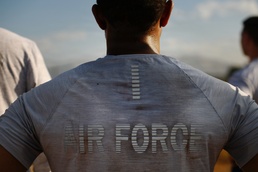
MARCH AIR RESERVE BASE, Calif. — While many Airmen are preparing for the Department of the Air Force's updated Physical Fitness Assessment standards taking effect July 1, members of the 163d Operations Support Squadron have already spent the past eight months building a culture of fitness that extends far beyond passing a test.
“I’m extremely proud of the initiative my squadrons and shop-level leadership teams have shown by prioritizing physical fitness and supporting a health-focused culture,” said Col. Sharon Cortney, the 163d Operations Group commander. “I’m especially impressed by their willingness to find creative solutions that fit their schedules, work environments, and personal goals.”
The updated assessment reintroduces a scored body-composition component based on the waist-to-height ratio and adds a two-mile run. Although the annual testing requirement for Air National Guard members remains unchanged, the additional scored components make the evaluation more demanding. Rather than waiting for implementation, squadron leaders used the transition to strengthen year-round fitness, resilience, and readiness across the unit.
Drawing on his background in sports medicine, nutrition, active duty experience, and guidance from the Warfighter's Fitness Playbook, Tech. Sgt. Garrett Smith, the 163d OSS fitness program manager, led the development of a structured fitness program. The program focuses on improving readiness, strengthening accountability, and aligning training with the requirements outlined in DAFI 36-2905, reinforcing that physical fitness is a year-round component of readiness rather than preparation for a single annual test.
"I worked to identify our fitness deficiencies, and then I built a program to focus on those areas," said Smith.
The fitness regimen includes group training three times a week and trail runs, with sessions held twice daily to accommodate shift workers. In addition, the 163d Operations Group implemented monthly mock fitness assessments starting in April to gauge progress and target improvement areas.
"Everyone has seen a significant change in their performance based on our unit's monthly mock fitness test results, and one of our Airmen has lost almost 30 pounds," said Senior Master Sgt. Chad Nightingale, 163d OSS.
Each session combines cardiovascular endurance, strength training, and functional exercises aligned with the new assessment standards. The emphasis is on building sustainable fitness habits that carry into daily readiness and overall health.
"I've had a proud dad moment seeing my coworkers improve and even shave minutes off their run times since we've started group fitness," said Smith.
Beyond improved scores and physical performance, leaders say the program has helped strengthen relationships across the squadron. By training together, Airmen have developed a culture where peers encourage one another and celebrate individual successes as collective victories.
Chief Master Sgt. Juliet Valdivia, the 163d OSS cyber defense superintendent, said the squadron intentionally designed the program around teamwork, creating an environment where accountability and camaraderie drive improvement.
"We're used to going to the gym, but our program over the past eight months focuses on working out together and the new standards," Valdivia said. "This aligns more with what our joint partners are doing and what our mission sets require."
Following each workout, Airmen gather for informal leadership discussions that provide opportunities for mentorship, professional development, and relationship building across ranks. These conversations have become an important part of the program, helping build trust and reinforce the squadron's commitment to developing resilient Airmen.
"It's refreshing to witness my Airmen show up and challenge themselves and each other to be better week after week," said Valdivia.
As the Air Force transitions to its updated fitness assessment standards, the 163d Operations Support Squadron is already embracing the principles those changes were designed to encourage: healthier Airmen, shared accountability, and a commitment to readiness. The squadron isn’t the only unit demonstrating that readiness; it’s being addressed across the 163d Attack Wing, not in the weeks before an assessment, but through consistent effort and a culture that challenges Airmen to improve every day.