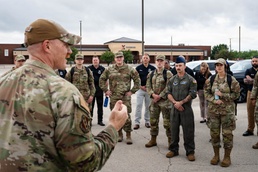
DYESS AIR FORCE BASE, Texas -- Dyess AFB hosted more than 40 participants from five distinct Air Force Global Strike Command professional development programs for a comprehensive mission immersion June 10-12.
The three-day visit brought together enlisted, officer, and civilian leaders from the Striker Titan, Trailblazer, Intern, Trident, and Phoenix programs to gain a deeper, intrinsic understanding of the 7th Bomb Wing’s conventional operations and strategic role in current and future force integration.
“The different AFGSC professional development programs are really phenomenal,” said U.S. Air Force Col. Ryan Stallsworth, 7th Bomb Wing deputy commander. “The ability for current and future AFGSC leaders to understand, holistically, the nuclear mission is an important part of their career."
To build that understanding, the tour provided the delegation with a firsthand look at the wing’s long-range strike capabilities during a Conventional Mission Showcase, which included an up-close view of the B-1B Lancer and its munitions.
Following the showcase, participants received classified briefings on the intelligence and strategic planning that drives the B-1 bomber mission, as well as an immersion from the B-21 Raider Program Integration Office regarding the base’s preparations to host the Air Force’s next-generation stealth bomber.
"AFGSC is expected to be the subject matter experts of conventional nuclear integration," Stallsworth added. "For that, it is really important leaders start here at Dyess, with a look at how the 7th Bomb Wing does conventional operations right now.”
Providing that on-the-ground perspective is exactly what wing leadership aimed to deliver during the immersion.
"Hosting this delegation of Striker Airmen allows us to show these future leaders exactly how Dyess fits into the broader Global Strike mission," said U.S. Air Force Chief Master Sgt. Benjamin McCullough, 7th Bomb Wing command chief. "By bringing them to the flightline and into our spaces, we ensure they return to their home units with a clear understanding of how our conventional force projects power globally."
The visit highlighted the unique but complementary goals of the various AFGSC development programs. Striker Titan provides a year-long education experience plus site visits for noncommissioned officers to broaden their perspective of the nuclear enterprise. Striker Trailblazer is a one-year program for government civilians supporting core functions in the command. Striker Phoenix and Striker Internships are both designed for officers, focusing on critical thinking in nuclear operations; and Phoenix interns immersing missile officers in Air Force mobility operations. Finally, Striker Trident is a three-year exchange between AFGSC and the U.S. Navy.
“This is my first experience seeing a B-1 or visiting Dyess,” said U.S. Navy Lt. Nathaniel Huff, AFGSC future concepts officer and Striker Trident member. “It’s been really interesting to see what the Air Force does, share my perspective as a submarine officer, and see how this joint integration impacts our strategic deterrent.”
For the participants, seeing the frontline mission firsthand provided valuable context to the time spent during their educational experience.
"As someone in Intercontinental Ballistic Missile maintenance, we don’t have an active flightline on our installation, so being able to see bombers for the first time and learn about the similarities to our mission is reassuring,” said U.S. Air Force Staff Sgt. Mary Lopez, 341st Maintenance Group quality assurance evaluator and Striker Titan member. “Learning from my peers has been very beneficial in broadening my understanding of the nuclear enterprise."
Programs like these are just a few of the many within the command designed to develop Striker Nation and the next generation of leaders within the nuclear enterprise by encouraging leadership through professional development opportunities and increasing expertise in national security and deterrence.
Ultimately, hosting these command-wide development programs provided Dyess with a critical platform to directly inform future AFGSC leaders about the reality of current conventional operations.
“Getting future leaders to understand what the transition to the B-21 looks like for a conventional base is an essential perspective,” Stallsworth said. “With the B-1 playing a critical role in past, present and future operations, it’s important to demonstrate how our capabilities support global deterrence and provide combatant commanders with flexible strike options.”
The integration of these diverse professional development programs at Dyess underscores AFGSC’s commitment to building a cadre of lethal, strategically minded leaders capable of executing the command's mission today and adapting to the challenges of tomorrow.