Having previously served as a battalion commander within the 1st Armored Division at Fort Bliss, Texas, Col. Michael Soyka was already well-acquainted with the sprawling 1.12-million-acre installation.
However, when he officially took command of the garrison in July 2025, leading an organization supporting nearly 90,000 Soldiers, families, and civilian personnel, even the seasoned armor officer found himself thoroughly impressed.
Fort Bliss became the first in its history to win the U.S. Army Installation Management Command Best Garrison award for Fiscal Year 2026 and was also recognized with the Commander-in-Chief’s award for the Army’s best installation.
“I’m just proud of this team. I’m proud of all of these people who have helped us win this thing,” said Soyka. “I get to stand out here and talk to you, but our Department of the Army civilians who are the ones that really make this happen every day. It’s a testament to their hard work and dedication that we are able to make this the best place in the Army.”
Running a Mega-City in the Desert
Fort Bliss, situated in El Paso, Texas, and extending into New Mexico, is a vast military installation larger than Rhode Island.
While it operates much like an independent city, its infrastructure relies on a highly resilient blend of self-managed systems and strategic regional partnerships to conquer the harsh Chihuahuan Desert environment.
The installation's massive utility footprint is overseen by the Directorate of Public Works and a dedicated civilian workforce. Their efforts in modernizing base operations and maintaining infrastructure in tough desert conditions have earned them top accolades, including multiple federal energy and water management awards prior to the current recognitions.
To ensure reliable service to its residents and mission areas, Fort Bliss manages its utilities with a strict focus on survivability and sustainability. The base operates extensive independent water systems to supply the Main Post and Biggs Army Airfield.
To maximize desert resources, the base also strategically partners with El Paso Water, most notably sharing a massive joint desalination plant to process brackish groundwater. Meanwhile, the DPW Environmental Division fully manages all wastewater, stormwater, and solid waste facilities on the installation.
Rather than operating as a completely isolated power island, the base efficiently draws its baseline day-to-day electricity from the regional grid managed by El Paso Electric. However, as a designated "Net Zero" installation, Fort Bliss also features massive on-site solar farms and advanced microgrids.
Ultimately, while the installation is integrated with the surrounding civilian infrastructure, its award-winning, self-sustaining backup systems ensure that all mission-critical areas remain fully independent and operational during any regional utility failures.
“The desert environment here is unforgiving on infrastructure,” Soyka explained. “Everywhere you look in this installation, you’ll find a part of this that’s leading the Army.”
In addition to traditional government-managed housing, Fort Bliss features a robust public-private housing initiative, where privately operated residences are integrated into the post community.
These partnerships allow for modern amenities, expanded maintenance services, and a variety of home styles that provide Soldiers and their families with quality living options. The public-private model ensures that housing remains flexible and responsive to the needs of military families, while still maintaining the high standards expected of living accommodations.
Supporting the Army’s Heavy Hitters
Tenant units encompass a diverse range of capabilities, including the heavy armor elements of the 1st Armored Division, the forward-looking initiatives of the Joint Modernization Command, and the strategic capabilities of the 32nd Army Air and Missile Defense Command and the 11th Air Defense Artillery Brigade. Fort Bliss provides an unparalleled advantage to these units through a unique combination of vast space and advanced technology.
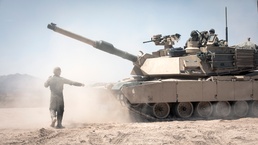
The base's massive open areas allow troops—such as the tank crews and mechanized infantry of the 1st AD’s brigade combat teams—to train with every weapon system the Army has. This gives units the rare opportunity to practice large-scale, realistic combat operations across long distances.
The installation is also equipped with advanced, digitally connected training ranges. These high-tech facilities allow vehicle crews and commanders to practice real-time communication and targeting using the latest network technology before they deploy.
Furthermore, Fort Bliss serves as a proving ground for the Army's newest innovations. With dedicated spaces for testing drones, anti-drone defenses, and missiles, the post ensures that the latest equipment is ready to face modern global threats, a mission directly supported by the JMC's ongoing network and equipment experiments.
Ultimately, Fort Bliss provides troops with a critical edge by letting them train exactly as they will fight. By combining wide-open spaces with state-of-the-art digital facilities, the garrison ensures that all units and their equipment are fully tested and battle-ready before going overseas.
“We have folks deploying to Europe in support of EUCOM; in CENTCOM operations; and we are the largest force generation site in the U.S.,” Soyka said, reflecting the massive mobilization efforts facilitated by the 5th Armored Brigade (First Army Division West). “We mobilize 35,000 to 50,000 Soldiers every year, and we’re supporting the southern border through commands like Joint Task Force North. Every single one of the nation’s priorities is based here at Fort Bliss—we’re absolutely at the tip of the spear.”
Taking Care of Our Own
Fort Bliss’s Directorate of Family and Morale, Welfare and Recreation pushed to improve Soldier quality of life in tangible ways, including the Iron Zero free ride program and expanded intramural sports, which recently won Army-wide recognition.
Alongside physical recreation, the installation places a heavy emphasis on family readiness and holistic support through Army Community Service.
By offering robust programs in financial readiness, employment support, relocation assistance, and family advocacy, ACS serves as the backbone of community resilience at Fort Bliss. These comprehensive resources ensure that while Soldiers are training and executing the mission, their families have a dedicated network ready to support them at every transition.
The garrison is also modernizing its dining and leisure services. Plans include a campus-style dining facility modeled after Fort Hood’s Bistro 42 and is crafting a Flexible Eating and Expanded Dining program, where Soldiers will also be able to use their meal benefits at commercial restaurants across the installation.
“Those things combined will be a huge change to the quality of life for our Soldiers,” Soyka said. “We’ve found our Soldiers spend a lot on transportation and food. If I can attack both of those with these initiatives, it’ll make a big difference.
“If you can demonstrate to Soldiers that the community they’re going to is going to take care of them and their family, then they’re more willing to come,” Soyka said.
Freedom Crossing at Fort Bliss, the installation’s public-private retail and entertainment hub, continues to serve as a point of pride for the community. The bustling center offers a wide variety of shops, restaurants, and recreational activities that cater to Soldiers, families, and visitors alike. Partnered with Exchange and commissary facilities, Freedom Crossing represents not only a place to shop or grab a meal, but also a symbol of the installation’s dedication to quality of life and community engagement.
“You just walk down the center of Freedom Crossing and you can see we’re the best in the Army—there’s nothing like it,” he said. Nothing about it being the largest AAFES facility in the world?
Borderland Bond
A key element in the award was the strong partnership with El Paso. Programs like Torch Transit—a free, on-post micro-transit service similar to Uber—along with spouse hiring fairs and community recreation activities, reflect this synergy.
This connection is further strengthened by the Fort Bliss Community Access Pass program, which actively invites non-affiliated civilians to experience life on the installation. The pass allows El Paso locals who pass a background check to easily enter the gates between 6 a.m. and 10 p.m. daily. This grants the general public access to military ceremonies, FMWR activities, and on-post dining.
“I think it’s an amazing thing—El Paso was just named the best big city to live in by U.S. News and World Report, and now you also have the best garrison in the Army all in one place,” Soyka noted. “Everything Fort Bliss does to make itself better makes El Paso better.”
El Paso Mayor Renard Johnson echoed this sentiment, emphasizing the deep integration between the military and civilian communities.
"This just reconfirmed how well our members at Fort Bliss are with the city of El Paso. It shows that Fort Bliss is El Paso, now El Paso's Fort Bliss," Johnson said. "A lot of the military lives in our community, works in our community, goes to our schools, and they're a part of our fabric. So, this just reinforces what we already know."
Expanding on the city's appeal, Johnson added, "I think El Paso is a beautiful community. Number one, it's a safe community. We're one of the safest cities in the nation. The other thing that makes it so good for our military personnel to want to live here is our affordability. We have some really good affordability here in El Paso. We have great quality of life. If they like hiking, outdoors, golf, fishing, any of the things that they're used to doing in any other community, you can do that right here in El Paso."
Looking Ahead
Fort Bliss has set its sights on solidifying its legacy through sustained innovation. The installation is now focused on implementing renewable energy microgrids, constructing 3D-printed barracks, and enhancing family and Soldier services.
“Every single person you see in front of you, and the hundreds of others still out there working today, made this possible,” Soyka added in his remarks to the media during a press conference, June 10. “It’s awesome.”
The focus continues on award-winning operational excellence, continuing to invest heavily in the people who make the mission happen, and ensuring the West Texas base remains the Army's undisputed "Installation of Choice" for decades to come.
“As a recruiting tool, winning these awards is huge,” Soyka said. “From the Army’s perspective, Soldiers can say, ‘I want to go to that installation.’ This is just another way for us to show that this is the installation of choice—it really is better here at Bliss.”