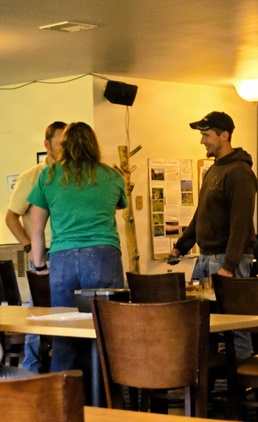
Natural resource professionals, land managers, agency representatives, and private citizens gathered June 11 at Fort McCoy for the annual Monroe County Invasive Species Working Group (MCISWG) Summer Field Day — continuing a longstanding partnership dedicated to protecting the region's forests, grasslands, wetlands, and waterways from invasive species.
The annual event, held at the chalet at Fort McCoy’s Whitetail Ridge Ski Area, provided participants with an opportunity to learn about invasive species identification, management techniques, restoration efforts, and collaborative conservation initiatives taking place throughout Monroe County and the surrounding region.
According to Fort McCoy Natural Resources Specialist Jessica Salesman, the event once again fulfilled its goal of bringing together partners from multiple organizations to share knowledge and strengthen cooperative management efforts.
We had an excellent turnout again this year with a different group of people than last year’s event,” Salesman said. People came from surrounding counties as well, including Vernon and Jackson. But the weather — like last year — made the outdoor-focused event challenging to organize. Even with the slight change in the afternoon program, people really seemed to enjoy the opportunity to learn how to identify many of the common invasive plants and aquatic organisms they may encounter in the county and West central Wisconsin.
“Hopefully next year the weather will be more cooperative, and we can get back to Pine View Campground again,” Salesman said. “The Monroe County Invasive Species Working Group tries to offer information on a wide variety of topics that are of interest to or can help landowners, interested citizens, and even other agency personnel address invasive species issues where they live and work. It’s a benefit to Fort McCoy because it fosters good working relationships and information sharing that ultimately assists our efforts to manage the impacts of invasive species on the installation. A special thank you to the Fort McCoy Directorate of Family and Morale, Welfare and Recreation for allowing us to host the event at the Whitetail Ridge Chalet and Pine View Campground — they’re both excellent venues for our program.”
The Monroe County Invasive Species Working Group is a partnership of federal, state, county, university, and private organizations dedicated to educating the public and promoting coordinated invasive species management, according to the group’s description. The group’s mission is to increase awareness of invasive species and encourage cooperative action to reduce their impact on natural resources across Monroe County.
Fort McCoy has been an important member of the working group for many years, serving as both a host site and an active partner in education and resource management efforts. The installation's Directorate of Public Works Environmental Division Natural Resources Branch works alongside Monroe County Land Conservation, Wisconsin Department of Natural Resources Forestry, University of Wisconsin Extension, and other partners to share expertise, exchange ideas, and demonstrate best management practices.
The installation's diverse landscape of forests, wetlands, prairie habitats, streams, and lakes provides an ideal setting for showcasing invasive species management strategies and restoration projects. Fort McCoy natural resource professionals routinely conduct monitoring, habitat restoration, invasive plant control, fisheries management, and wildlife conservation efforts across thousands of acres on the installation.
Managing invasive species is especially important on federal installations such as Fort McCoy because healthy ecosystems directly support military readiness, environmental stewardship, and recreational opportunities. Invasive plants and animals can rapidly displace native vegetation, reduce biodiversity, degrade wildlife habitat, increase erosion, alter water quality, and interfere with land management activities. Left unchecked, they can affect the long-term sustainability of training lands that support year-round military exercises and mobilization operations.
Fort McCoy's proactive approach emphasizes early detection, monitoring, education, and integrated management techniques that combine mechanical removal, prescribed fire, herbicide treatments, habitat restoration, and innovative methods such as targeted grazing. By identifying and controlling invasive species before they become widespread, natural resource managers can reduce long-term costs while preserving healthy ecosystems for future generations.
The annual Summer Field Day reinforces the importance of collaboration among public agencies and private landowners, recognizing that invasive species do not respect property boundaries. Seeds, insects, aquatic organisms, and other invasive species can spread through wind, water, wildlife, vehicles, equipment, and human activity, making regional partnerships essential for successful management.
Throughout the event, presenters discussed current invasive species concerns, identification techniques, treatment options, and ongoing management projects designed to protect native ecosystems. Participants also exchanged ideas and learned from the experiences of fellow natural resource professionals and landowners, strengthening relationships that support coordinated conservation efforts across Monroe County.
The working group's collaborative approach benefits not only Fort McCoy but also neighboring forests, farms, wetlands, parks, and private lands throughout western Wisconsin. By sharing expertise and promoting consistent management practices, partners help reduce the spread of invasive species while improving habitat for native plants, fish, pollinators, birds, and other wildlife.
Fort McCoy's continued involvement in the Monroe County Invasive Species Working Group reflects the installation's long-standing commitment to environmental stewardship while supporting its military training mission. Through education, partnership, and science-based management, the installation continues to play a leading role in protecting natural resources that are vital to military readiness and the ecological health of the region.
By hosting another successful Summer Field Day, Fort McCoy and its partners continued a tradition of cooperation that has strengthened invasive species awareness and management throughout Monroe County for many years. The annual gathering remains an important forum for sharing information, building partnerships, and promoting practical solutions that benefit public lands, private property owners, and the region's natural resources.
Fort McCoy’s motto beginning in 2026 is “Training the Total Force and Shaping the Future since 1909.” The installation’s mission: “Fort McCoy strengthens Total Force Readiness by serving as a training center, Mobilization Force Generation Installation, and Strategic Support Area enabling warfighter lethality to deploy, fight, and win our nation’s wars.”
And Fort McCoy’s vision is, “To be the premier training center supporting the most capable, combat-ready, and lethal armed forces.”
Located in the heart of the upper Midwest, Fort McCoy is the only U.S. Army installation in Wisconsin. The installation has provided support and facilities for the field and classroom training of more than 100,000 military personnel from all services nearly every year since 1984.
Learn more about Fort McCoy online athttps://home.army.mil/mccoy, on Facebook by searching “ftmccoy,” on Flickr at https://www.flickr.com/photos/fortmccoywi, and on X (formerly Twitter) by searching “usagmccoy.” Also try downloading the My Army Post app to your smartphone and set “Fort McCoy” or another installation as your preferred base.
Fort McCoy is also part of Army’s Installation Management Command where “We Are The Army’s Home.”