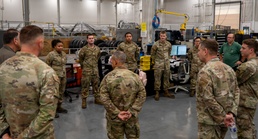
JOINT BASE CHARLESTON, S.C. - As C-17 Globemaster III aircraft sustain a heightened operational tempo supporting missions around the globe, a compact team of Airmen at Joint Base Charleston continue to work behind the scenes supporting the Air Force's global mobility capability.
From March through May 2026, Airmen assigned to the 437th Maintenance Squadron Wheel and Tire Shop repaired 761 C-17 wheels accounting for 46% of all C-17 wheel and tire repairs across the U.S. Air Force. Their efforts ensured a steady supply of mission-ready wheels, directly supporting global airlift operations and aircraft readiness worldwide.
The team repaired 576 main wheels and 185 nose wheels during the three-month period. The team also achieved a 78% repair rate, returning 761 wheels to service while only 209 were deemed non-repairable.
The significance of the shop's output became especially evident as C-17 operations surged in support of global mobility requirements, driving increased wear on aircraft tires and creating unprecedented demand for repairs.
"The success of our 437th Maintenance Squadron Wheel and Tire Shop is the Airmen," said U.S. Air Force Col. Patrick McClintock, 437th Airlift Wing commander. "During the heightened operational demand, Airmen on the flight line changed tires at an unprecedented rate while the wheel and tire shop worked around the clock to keep up with fleet requirements. They are the magic and truly keep us ready to fight tonight."
The increased demand placed the wheel and tire shop at the center of sustaining mission readiness during a period of elevated operations. As aircraft cycled through missions at a faster pace, the team's ability to rapidly inspect, repair and return wheels to service helped ensure maintainers across the Air Force had the resources needed to keep C-17s mission capable.
"When those aircraft are flying at a high operational tempo, they're wearing through tires much faster," said Master Sgt. Cole Lumadue, 437th MXS Wheel and Tire section chief. "Having those wheels available at home station allowed us to push assets forward to locations that needed them most. If the wheels aren't available, those aircraft can't continue flying."
The increased demand required the team of maintainers to adapt while working through equipment limitations and an unprecedented workload.
For much of this operational period, the Wheel and Tire Shop Airmen carried the mission before receiving temporary augmentees from another maintenance section. Despite operating with limited repair equipment, the team maintained production by reorganizing workflows, adjusting schedules and prioritizing repairs.
Each wheel undergoes cleaning, inspection, non-destructive testing, rebuilding and quality assurance before returning to service. Lumadue said the shop's high repair rate reflects the team's technical expertise and disciplined inspection process.
"I think it really represents our determination and hard work to keep things going," said Senior Airman Cyanna Carter, 437th MXS Wheel and Tire technician.
While the repair process happens behind the scenes, its impact reaches every C-17 mission. Aircraft assigned across the Air Force rely on a steady supply of serviceable wheels to continue transporting personnel, cargo and humanitarian aid around the globe.
"People don't always think about wheels," said Carter. "Without wheels, the aircraft can't properly take off or land. We are a vital part of keeping the mission going."
Each C-17 main wheel weighs hundreds of pounds, making teamwork essential throughout the repair process and requiring multiple Airmen to safely move and inspect each wheel.
While the wheels they repair may travel thousands of miles from Joint Base Charleston, each one reflects the same commitment shared by the Airmen who keep them turning.