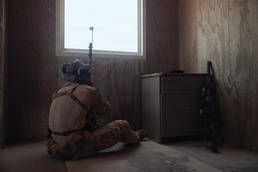
TWENTYNINE PALMS, Calif. —For the first time in its history, the Marine Corps Reserve is actively deploying multi-domain collection assets during the Information & Intelligence Integration Course (I3C), marking a significant technological milestone for Integrated Training Exercise (ITX) 3-26 at Marine Corps Air Ground Combat Center Twentynine Palms.
I3C is a rigorous, three-day, non-live-fire evolution that provides a progressive training opportunity for Marine Air-Ground Task Force 23 (MAGTF-23) intelligence and information entities to rehearse complex tactics, techniques and procedures associated with advanced equipment operation, data exchange, and battlespace awareness. Historically, this level of multi-domain integration has been challenging to replicate in Reserve training environments. However, during ITX 3-26, Reserve Marines are successfully bridging that gap, actively synchronizing signals intelligence and electronic warfare, limited expeditionary cyberspace operations and information maneuver elements into a single, cohesive intelligence picture.
“As a commander, having a clear and immediate picture of the battlespace is everything,” said Col. Aaron Awtry, commanding officer of MAGTF-23. “These new emerging technologies within the Marine Corps have fundamentally changed how we operate. They have greatly improved the speed and accurate flow of information from the tactical edge directly to the command operations center, allowing faster, more informed decisions to be made. Implementing these technologies in real-time through this new I3C course this year demonstrates the rapid modernization of the Reserve Force as we keep pace with the evolving character of warfare and the demands of the future fight.”
The course unfolds through a combination of classroom instruction, detailed planning, and dynamic lane training. Operating within Range 220, intelligence collectors and operators must actively reconnoiter the area, locate adversary signatures, and execute information-related activities in a simulated, contested environment. The MAGTF-23 Intelligence Operations Center (IOC) is then tasked with managing these diverse collections, analyzing the incoming data, and producing actionable intelligence for commanders.
“For ITX 3-26, Tactical Training and Exercise Control Group is integrating its Coyote Electromagnetic Warfare Red Teams in direct support of MAGTF-23 as part of the exercise force,” said Chief Warrant Officer 2 Zachary Moore, a subject matter expert and instructor for the course’s multi-domain assets. “This gives Reserve Marines an opportunity to use capabilities they will not have organically until future force design initiatives are implemented, while increasing our section’s proficiency in signals intelligence and electromagnetic warfare integration and operations. I3C gives units a unique opportunity to bring all capabilities, including SI/EW, imagery intelligence, scouts, information operations, sUAS and cyber, into the scenario to coordinate, plan, collect and disseminate intelligence and information products. Our ‘no sensor left behind’ approach helps Marines refine their craft, introduce new capabilities ahead of force structure and capability delivery, and better plan and conduct multi-domain operations in increasingly contested environments.”
The successful execution of I3C sets conditions for information and intelligence support throughout the remainder of ITX 3-26. As the character of warfare continues to evolve, the Marine Corps Reserve's ability to master these next-generation technologies ensures that its Marines remain a lethal, ready and agile force prepared to dominate in the complex, data-driven conflicts of tomorrow.