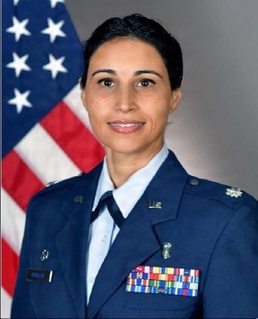
Commentary by Lt. Col. Kieran K. Dhillon, USSF Director of Psychological Health
We have all become familiar with the word “resilience.” Our culture of resilience was formally introduced to us through the Comprehensive Airman Fitness program in 2010 as a service-wide effort to enhance holistic health. Since then, we have seen a surge in demand for mental health care.
Awareness of and demand for mental health care has increased through the years, yet we continue to navigate challenges with active component suicide rates and mental health across the Total Force. Defense Suicide Prevention Office data displayed an increase in these rates from 2011 to 2023, mirroring that of the national population, though with a slight drop from 2023 to 2024. Every year, AFMS mental health leaders push for policy and cultural reform that better posture our Airmen and Guardians to be resilient warfighters.
We continue to bridge the gap between acknowledging the effects of daily stressors and unique hardships and taking actionable steps to alleviate the weight of these challenges using a spectrum of non-clinical and clinical mental health services. Developing psychological habits, which strengthen resilience, are built over time through daily, deliberate effort and community support.
A challenging moment may arise, but what will you do about it? How will you overcome the challenge? How do you ensure it does not define you, control you, or prevent you from being the best you can be, whether at home for yourself, your loved ones or at the front lines of your duty?
Defining warrior personality
As we navigate DAF cultural transformation, it is time to look at what we as a force are doing with resilience.
Resilience is our reaction to adversity. Resilience is the ability to adapt and return from a challenging experience through positive and effective coping skills while preserving mental stability. It is about surviving these taxing situations. When thinking of the concept of a warrior, we envision someone who constantly strives for self-improvement, learns from mistakes, and takes constructive feedback to become better.
Warriors set goals that drive their daily actions. They pursue obstacles to be conquered, knowing they will emerge better than they were before. They hold principles that shape their character to be responsible, discerning, and disciplined.
The discipline of positive psychology recognizes two components that influence the strength of resilience - grit and hardiness - which are attributed to these characteristics of a warrior.
Developing grit and hardiness
Grit is the internal power to relentlessly pursue your goals, according to a https://www.google.com/url?q=https%3A%2F%2Fdoi.org%2F10.33425%2F2832-4226%2F22006. It is the fuel that motivates you to stay up late to study, push physical training to the next level, or forego convenience now for your future self.
For a warrior, this means applying passion and drive to your military professional development independent of external validation. Grit is a sustained drive toward a goal over the course of years. Grit can be measured and is a prediction of your well-being, psychological health, life satisfaction and confidence in handling challenges. You can check yours https://angeladuckworth.com/grit-scale/. Think of grit as your engine.
If grit is your engine, hardiness is your armor. Hardiness is how a person adapts and performs under high-demand circumstances while remaining emotionally healthy and stable. It is the mindset required to have the courage and the grit to persevere through difficult times. https://www.researchgate.net/publication/284467899_Grit_and_Hardiness_as_Predictors_of_Performance_Among_West_Point_Cadets. Those with high hardiness are less likely to decompensate under stress, and https://www.apa.org/pubs/journals/releases/apl-a0036751.pdf.
http://dx.doi.org/10.1037/0022-3514.37.1.1, psychologist and researcher, identifies the strength of this armor as an alloy of three core elements:
Military members have opportunities every day to challenge ourselves. We learn critical thinking and build technical competence to express control. Commitment is experienced through our core values. These shared values connect us to each other and shape our identities.
Resilience as a conscious choice
We have the ingredients for growing, supporting, and fortifying resilience, grit, and hardiness available to us in every corner of our service. Building your sense of hardiness and grit will optimize your resilience response when, not if, things get tough.
Engage in self-discovery. How has your degree of hardiness helped you channel your grit? Are you channeling your hardiness into meaningful pursuits that will help you build a high-quality life? The people we surround ourselves with, the goals we set, and the discipline we have all influence our physical and psychological well-being. When you look back on your time in service, will you think of yourself as a warrior who experienced and accomplished greatness, or someone who wished they did?
This is about developing your identity as a warrior with skills that will carry you across any battlefield you are on. One source of inspiration is the poem “Invictus” by William Ernest Henley: “I am the master of my fate; I am the captain of my soul.”
Navigate through life with purpose and with meaning as the warrior you are.