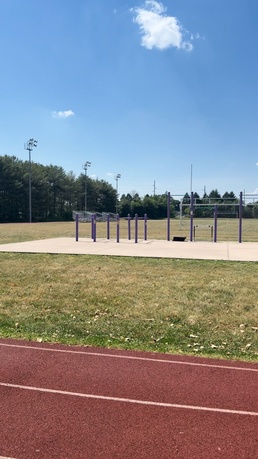
As Air Force fitness standards change, Team Dover Airmen have access to a free resource designed to help them train smarter, prevent injuries and stay mission-ready. The Dover Air Force Base Human Performance Center, located in building 423 inside the Base Fitness Center, offers services through the Operational Support Team, or OST. The team provides physical health, mental health, nutrition, body composition and recovery support to eligible Team Dover members. “While physical training is an individual responsibility, there are teams across the installation dedicated to helping all of us excel on the new PT test,” said Lt. Col. Kurtis D. Snyder Jr., 436th Aerial Port Squadron commander. “The Operational Support Team (OST) is a prime example, existing to help make us better Airmen in all facets of our lives and careers. While the new test is physically demanding, overcoming the mental hurdle of tackling a new standard is often the bigger challenge for many. The OST is an invaluable resource for navigating both the physical and mental aspects of this transition.” For Airmen across Dover Air Force Base, fitness affects not only their PT score, but also their ability to execute the mission safely and effectively. “For every Airman, our core job is not just running two miles or doing push-ups,” Snyder said. “The physical demands of our AFSCs (Air Force Specialty Codes) are often quite different from the PFA (Physical Fitness Assessment). At the 436th Aerial Port Squadron, for example, our Airmen push, pull and move heavy cargo all day long. No one can sustain that high level of physical exertion for a 20-year career without proper maintenance. Failing to maintain our fitness often leads to injuries that take someone out of the fight, resulting in the rest of the team carrying a heavier load, literally and figuratively. It is critical to stay fit so we don’t get hurt doing a dangerous job at home or while deployed. Ultimately, the PFA isn’t just a running test; it measures how well you’ve maintained your body to perform your Air Force mission. We succeed as a team, and we need every member ready to carry their share of the load.”
Available services include InBody 770 body composition scans, physical therapy consultations, mobility screenings, gait analysis, exercise programming, fitness improvement consultations, physical training sessions, mental health consultations, sleep consultations, nutrition and meal planning appointments and performance nutrition consultations. The center also offers a recovery room during walk-in hours, where Airmen can sign in and use equipment for soft tissue recovery. Classes provided through the team give Airmen practical ways to improve their readiness. Running Clinic focuses on running technique through classroom instruction, drills and practice. Injury Prevention Fundamentals teaches movement and full-body recovery techniques to prevent avoidable overuse injuries. Exercise 101 covers the fundamentals of resistance and cardiovascular training, while Performance Nutrition helps Airmen learn how to fuel for maximum performance.
Group classes and InBody scans are open to active-duty, Guard, Reserve, spouses, dependents, retired military and Department of War civilians. Recovery room use and one-on-one appointments are currently open to active-duty, Guard and Reserve members. All Human Performance Center services are free. “Utilizing the OST is a proactive act of personal resilience; the team is there to help you stay mission-ready before a problem becomes a crisis,” said Ms. Shawn VanVessen, Integrated Prevention and Response director. “Seeking help from the OST is not a sign of weakness; it is a strategic move to bolster your own resilience. Because the OST embeds within the unit, they understand that the "tough it out" culture can sometimes lead to career-ending injuries. They offer a low-threat environment where you can address minor issues, whether physical aches or mental fatigue, before they escalate. Building resilience means knowing when to use your resources to stay at peak performance, and the OST is the most accessible resource you have to ensure your longevity in the Air Force.” Snyder echoed that message and encouraged Airmen to see helping professionals as mission partners. “In my experience, we often feel the greatest sense of accomplishment when performing our trained mission, whether that’s watching a repaired jet take off or seeing cargo reach the warfighter,” Snyder said. “The same is true for our support professionals: doctors, therapists and counselors. I often hear people say they don't want to burden others with their problems or prefer to just 'push through.' I’d encourage anyone feeling this way to remember that these professionals have trained for years, earning degrees and certifications specifically to help military members. Assisting you is their mission. By raising your hand and accepting help, you aren't being a burden; you are getting the support you need while allowing these dedicated professionals to execute the job they trained their whole careers to do.” OST also supports commanders by helping them understand trends in their units and identify areas where Airmen may need additional support. “When I took command, I had many initial goals for the unit, but they lacked in-depth analysis and complete visibility,” Snyder said. “The OST not only provided a clearer, data-driven picture of the unit, but also gave us a targeted list of actionable items to improve our Airmen's lives. As a commander, when I walk into any room in the squadron, everyone is happy, everything is perfect and this is their favorite assignment ever. While I’d love to believe that's the whole truth, it rarely is. The OST looked deeper into my unit than I could on my own, providing authentic insight into how people were truly feeling and identifying our real strengths and weaknesses. Their guidance has been invaluable, and the OST is easily one of the most effective external support entities I’ve encountered during my command.” VanVessen said this type of support helps commanders build stronger, healthier teams. “The OST builds unit-level resilience by identifying systemic health risks and providing commanders with actionable solutions to keep their teams lethal and capable,” VanVessen said. “Commanders rely on a resilient force to execute the mission. The OST supports this by analyzing squadron-specific data to identify ‘hot spots’ for injuries or mental health trends. By embedding physical therapists, psychologists and social workers directly into high-risk units, the OST fosters a culture of resilience within the squadron. This on-site presence allows for immediate intervention and tailored education, which directly supports the commander’s goal of a healthy, deployable and resilient workforce.”
The Human Performance Center is located in building 423 inside the Base Fitness Center. The center is open from 8:30 a.m. to 3:30 p.m. for walk-in services or by appointment. Team Dover members can view and register for Human Performance Center classes and services through the center’s scheduling page at https://www.picktime.com/DoverAFBHumanPerformanceCenter. As Airmen prepare for new fitness expectations, OST gives them a place to start. The Human Performance Center provides free support in running, strength training, injury prevention, nutrition, sleep, stress and recovery.
The Air Force’s updated fitness test gives Airmen more options, including a 2-mile run or HAMR for cardio, traditional or hand-release push-ups for strength and sit-ups, cross-leg reverse crunches or a forearm plank for core strength. The updated assessment also includes a waist-to-height ratio measurement. Fitness tests from March 1 through June 30, 2026, are diagnostic to help Airmen adjust to the new standards. The first official testing window under the updated standards is scheduled to begin July 1, 2026.