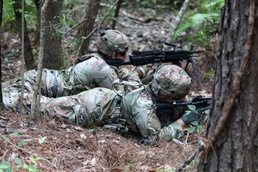
Army Reserve sustainment Soldiers train for Large-Scale Combat Operations during Operation Sentinel Justice
GULFPORT, Miss. — Beneath the summer heat of Mississippi's Gulf Coast, Soldiers of the 155th Combat Sustainment Support Battalion (CSSB), 311th Sustainment Command (Expeditionary), traded the comforts of traditional facilities for tents, camouflage netting and expeditionary operations as they participated in Operation Sentinel Justice near Gulfport International Airport.
Positioned in a field adjacent to the airport, the battalion established an austere command post and sustainment hub designed to replicate the conditions Soldiers may face during future large-scale combat operations. The exercise challenged Soldiers and leaders to operate with limited infrastructure while providing critical sustainment support across a complex operational environment.
Operation Sentinel Justice is a multi-component training exercise focused on enhancing readiness, interoperability and mission command capabilities across the force. The exercise places participating units in a realistic operational scenario designed to simulate modern large-scale combat operations against a near-peer adversary. Within the exercise, the 155th CSSB served as a key sustainment element, ensuring forces throughout the training area received the supplies and support necessary to continue operations.
"Our role during Operation Sentinel Justice is to provide logistical support to a notional area of operations used during the exercise," said Command Sgt. Maj. Karen Rivera, command sergeant major of the 155th CSSB. "We have four companies which provide logistical support moving Class I and Class III supplies to units operating throughout the training area around Ivy Town."
Rivera explained that Class I supplies include food and water while Class III supplies consist primarily of fuel, both essential commodities that keep Soldiers and equipment operational.
While sustainment has always been a core Army function, Rivera emphasized that the environment in which the battalion is training represents a significant shift in focus for Army Reserve units.
"This training is very important for the Army Reserve because it simulates large-scale combat operations," Rivera said. "My commander's intent is to simulate an austere environment which aligns with this type of training. It's something different than prior training and is very important because we are transitioning from operating in hard locations to austere locations, which will simulate areas we may have to occupy in the future."
The battalion's field location forced Soldiers to think differently about every aspect of operations, from communications and security to logistics planning and sustainment distribution.
"This gets us thinking about the things we might need if we don't have the infrastructure available," Rivera said. "It also provides us the ability to deliver logistical support so that units fighting the fight have the resources they need to continue operations and defeat threats in the area."
For many Soldiers, the exercise was as much about developing resilience as it was about refining technical skills.
"The benefits of this training are getting comfortable with being uncomfortable," Rivera said. "We often operate in very relaxed environments, but this is pushing us to wear our gear and get the repetitions needed to face adversity. It's pushing us out of our comfort zones and forcing us to think ahead, plan for contingencies and prepare for situations we may not have considered before."
The austere conditions also provided battalion staff members an opportunity to rehearse and refine the processes required to synchronize sustainment operations across multiple units.
"This gives us the ability to go through those motions, exercise the staff and synchronize what they're going to need from each other to accomplish the mission within the commander's vision," Rivera said.
According to Lt. Col. Evan Carey, commander of the 155th CSSB, the exercise offered an invaluable opportunity to conduct sustainment operations under realistic conditions while supporting a large training population across the Gulfport area.
"For this exercise, we are located in Gulfport, Mississippi, at Gulfport International Airport," Carey said. "We are providing area sustainment under the 143rd Expeditionary Sustainment Command, supporting all the units operating in and around Gulfport."
Carey noted that one of the greatest advantages of Operation Sentinel Justice is the ability to execute actual sustainment missions rather than relying solely on simulated scenarios.
"The biggest benefit here is getting after real-world sustainment," Carey said. "We're receiving real sustainment missions and providing real sustainment support. We're also receiving notional support, but there's nothing better than actually putting real assets on the road, moving real cargo and sustaining Soldiers."
The exercise also allowed the battalion to embrace a truly expeditionary mindset.
"We're preparing for large-scale combat operations," Carey said. "We've really reduced our footprint and are taking the time to camouflage, hide ourselves and prepare to meet any challenge our nation may face."
The shift toward expeditionary operations reflects a broader transformation occurring throughout the Army Reserve as the force adapts to emerging threats and prepares for future conflicts.
"The Army Reserve as a whole is transitioning from the Global War on Terrorism mindset back into the large-scale combat operations environment against a peer-to-peer adversary," Carey said. "This training is getting our Soldiers accustomed to what it's like to operate in an expeditionary environment against a near-peer adversary."
That transition requires more than tactical proficiency. It demands a change in mindset and planning considerations.
"It shows them the hardships and the change in mentality required when we're not going against an insurgency but against a force with near-peer capabilities," Carey said.
Beyond the tactical and operational benefits, battalion leaders pointed to another important outcome: strengthening relationships across formations.
"What is really great about this exercise is that we get to work with other units and commands across the board," Rivera said. "It gives us the ability to build relationships so that if we do deploy, we understand what each other does and are able to support the mission accordingly."
The complexity of supporting multiple organizations also created valuable opportunities to test the battalion's sustainment enterprise and planning processes.
"I think the biggest challenge this exercise allows us to overcome is really testing and stressing our battalion support operations team, our SPO team," Carey said. "We can train in the drill hall and conduct field training exercises but actually provide real-world sustainment in a large environment like this, where we're supporting thousands of people and multiple pieces of equipment, there's nothing better than that."
As temperatures climbed and long days became the norm, Soldiers continued to embrace the demanding conditions and opportunities presented by the exercise.
"I think this is just a great opportunity," Carey said. "The Soldiers are embracing it. It's hot. It's difficult. It's long days. But those are the things that really bring the unit together and help us truly function as a team while getting after training and supporting our Soldiers."
For the Soldiers of the 155th CSSB, Operation Sentinel Justice provided more than a training event. It offered a realistic glimpse into the future operating environment of the Army Reserve—one where sustainment units must remain agile, expeditionary and ready to deliver critical support wherever the mission requires. Through realistic field conditions, real-world logistics missions and collaboration across the force, the battalion strengthened its readiness while ensuring that sustainment remains a decisive advantage on tomorrow's battlefield.