YOKOSUKA, Japan — U.S. Naval Hospital (USNH) Yokosuka's proactive approach to cancer screening has been recognized by Defense Health Network (DHN) Pacific Rim leadership as a best practice, highlighting how targeted outreach, expanded access to care and a patient-centered approach to preventive medicine can improve health outcomes while supporting military readiness.
Over the past year, USNH Yokosuka achieved significant improvements across multiple cancer screening measures. Breast cancer screening rates increased from 69.0% in March 2025 to 82.8% in February 2026, exceeding the Defense Health Agency (DHA) goal of 78.64%. Cervical cancer screening rates reached 83.3%, surpassing a goal of 75.21%, while colorectal cancer screening rates climbed from 59.2% to 64.5%, approaching the DHA goal of 65.91%.
DHN Pacific Rim recently highlighted the hospital's operational approach as a model for other military treatment facilities across the region, recognizing its ability to increase participation in preventive screenings through collaboration, innovation and patient-focused access initiatives.
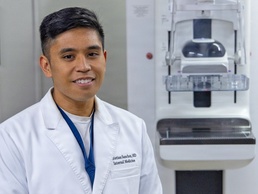
Lt. Christian Sanchez, staff internist, department head of Internal Medicine and USNH Yokosuka's Healthcare Effectiveness Data and Information Set (HEDIS) champion for breast, cervical and colorectal cancer measures, helped spearhead the initiative by coordinating outreach efforts, preventive health campaigns and process improvements across clinical and population health teams.
“Behind every percentage point is a patient who may have an opportunity to detect cancer earlier, when treatment is often simpler and outcomes are better,” Sanchez said. “The numbers matter, but what mattered most was helping patients receive cancer screening before a problem developed.”
Hospital officials found that most patients were not declining screening exams but instead faced logistical challenges. Many were unaware they were overdue, struggled to schedule appointments, completed testing outside the Military Health System that was never documented, or lacked convenient access to services. To address those challenges, the hospital expanded self-referral mammography services, increased fecal immunochemical testing availability, offered walk-in preventive health events and implemented targeted outreach and reminder workflows.
“Most patients weren't intentionally avoiding screening,” Sanchez said. “Many simply didn't realize they were overdue or how to access the services available to them. Once we improved awareness and made the process easier, participation increased.”
While Sanchez focused on improving patient access, Cmdr. Brian Taylor, director for Health Care Business at USNH Yokosuka, said the hospital's long-term success stemmed from creating a sustainable population health strategy.
“There wasn't one thing that drove these improvements,” Taylor said. “Success came from creating a system that identified overdue patients, shared responsibility across the healthcare team and made it easier for patients to get the care they needed. When health screening becomes part of routine operations, improvements become sustainable even as personnel and leadership change.”
Hospital leaders say cancer screening is also an important component of military readiness.
“Cancer screening is readiness medicine,” said Capt. Torrin W. Velazquez, director of U.S. Naval Hospital Yokosuka and commanding officer of U.S. Navy Medicine Readiness and Training Command Yokosuka. “Early detection creates opportunities to intervene before disease affects a service member's health, deployability or long-term quality of life. Every completed screening represents an opportunity to preserve health, maintain readiness and ensure our force remains prepared to execute the mission.”
Velazquez noted that preventive care can be especially challenging to prioritize in an overseas military community where operational commitments, frequent moves and family obligations often compete for time and attention.
“Military families lead busy lives,” Velazquez said. “Deployments, permanent change of station moves, work schedules and the challenges of living overseas can make preventive care easy to postpone. Our responsibility is to remove as many barriers as possible so patients can access the care they need before a medical issue becomes more serious.”
Taylor said the recognition from DHN Pacific Rim reflects the strength of the hospital's population health approach and the collaboration required to sustain improvement across the organization.
“The recognition validates the work our teams have done to embed cancer screening into daily operations,” Taylor said. “What makes this approach effective is that it doesn't depend on one clinic or one individual. It depends on teamwork and making care easier for patients to access.”
The hospital's efforts support the DHA's priorities of delivering warfighter medical readiness, providing exceptional patient care and building an integrated health system that emphasizes prevention and long-term health outcomes.
“We still have opportunities to reach more beneficiaries, especially those stationed farther from Yokosuka,” Taylor said. “Our goal is to continue making preventive screenings easier to access regardless of where beneficiaries live or work.”
Beneficiaries who are unsure whether they are due for breast, cervical or colorectal cancer screening are encouraged to speak with their primary care manager or contact the USNH Yokosuka Appointment Line at DSN 243-5352, commercial 046-816-5352 or from the United States at 011-81-46-816-5352. Patients can discuss recommended screenings during routine healthcare appointments and receive guidance on eligibility based on age, risk factors and current screening guidelines.
Eligible beneficiaries may also use USNH Yokosuka's self-referral mammography program, which allows patients to schedule screening mammograms without a provider referral. To begin the process, beneficiaries can contact the USNH Yokosuka Mammography Department at DSN 243-3964.
For beneficiaries who may be overdue for a screening exam, Sanchez offered a simple message.
“Don't wait until you have symptoms,” Sanchez said. “Many cancers develop silently for years before causing noticeable problems. A mammogram, Pap test or colorectal cancer screening may take only a small amount of time today, but it could have a life-changing impact tomorrow. Think of screening as an investment in your future, your family and your health.”
“When we make cancer screening more accessible, we are investing in both the health of our beneficiaries and the readiness of the force,” Velazquez said. “That's a direct contribution to mission success.”
As USNH Yokosuka continues refining its population health programs, leaders hope the lessons learned will help more beneficiaries access timely preventive screenings, improve long-term health outcomes and strengthen the readiness and resilience of the military community throughout the Indo-Pacific region.