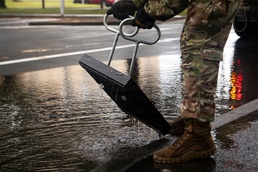
YOKOTA AIR BASE, Japan — When severe weather approaches, members of the 374th Civil Engineer Squadron at Yokota Air Base shift into action. Whether preparing for a typhoon, heavy rainstorm or other natural disaster, civil engineers across multiple flights and shops work together to minimize impact to the installation, protect infrastructure and ensure the Wing can continue its mission. Preparation begins days before a storm arrives. Teams from the operations flight, heavy repair shop and water and fuels systems maintenance flight inspect critical areas around the base, clearing storm drains and removing debris that could contribute to flooding. Civil engineers also provide sandbag-filling locations for facility managers and residents to help protect homes and facilities vulnerable to rising water. U.S. Air Force Senior Master Sgt. Warner Houston, 374 CES infrastructure superintendent, shared first-hand accounts on experiences how the squadron tackles any imminent severe weather by preparing, planning and executing various strategies. "We all play a part during the preparation phase," Houston said. "The amount of work depends on the circumstances, but our goal is always the same, which is to reduce risk and be ready to respond." As weather conditions worsen, the squadron transitions into 24-hour operations. A ride-out team made up of personnel from heavy repair, water and fuels systems maintenance and electrical systems remains on duty throughout the storm, monitoring conditions and responding to immediate concerns. At the same time, the squadron's workforce management team activates the unit control center, serving as the central hub for tracking emergency work requests and monitoring installation conditions. The Unit Control Center maintains communication with the emergency operations center, providing real-time updates and helping leadership prioritize response efforts across the base. Once the storm passes, civil engineers quickly shift their focus to recovery operations, as there is rarely a fixed timeline for addressing storm-related damage. Instead, response efforts are prioritized based on mission requirements, safety concerns and community needs. "The UCC becomes the main node for gathering information from around the base," said Houston. "Issues are addressed based on priority, whether that's mission generation, housing or safety. We're constantly reassessing and reprioritizing as new information comes in." Civil engineers tackle a wide range of challenges during and after severe weather events. Their responsibilities include clearing flooded roadways, restoring power, removing fallen trees and mitigating hazards affecting the airfield, facilities and housing areas. Many of those challenges require creative problem-solving and technical expertise. "Electrical issues are often some of the most complex obstacles we face, but every storm is different," said Houston. "Sometimes it's road flooding that requires traffic rerouting. The challenges are always changing." Without technical orders covering every possible scenario, engineers rely heavily on advanced training, institutional knowledge and years of experience to safely restore services and infrastructure. For members of the 374th CES, supporting the mission extends beyond maintaining facilities and utilities. Their work may impact the quality of life for people across Yokota. "At our core, we are in the customer service and mission-support business," Houston said. "Knowing our efforts help keep the wing's mission moving forward while providing a safe and reliable environment for families living on this installation is incredibly rewarding. It's what drives this team to put their expertise and craftsmanship to work every single day." As storm season continues across the Pacific, Yokota's civil engineers remain prepared to answer the call, standing ready to protect the installation and support the mission.