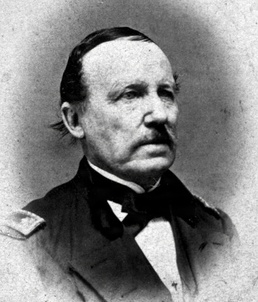
Brig. Gen. Charles Tripler’s mark on military medicine went beyond providing care to the injured and sick: he helped build a more organized, effective, and safe military medical system. In an era when disease often killed more soldiers than combat, Tripler pushed for stronger standards in recruiting, better sanitation, more organized medical administration, and clearer guidance for U.S. Army surgeons.
His lasting impact in military medicine echoes in the mission of Tripler Army Medical Center, Honolulu, Hawaii: to “generate, train, and sustain readiness to provide a medically ready joint force and ready medical force to deploy, save lives, and conserve the fighting strength. We deliver quality, safe and effective healthcare to all of those entrusted to our care.”
Named after Tripler in 1920, the nationally recognized hospital is the largest military hospital or clinic in the Indo-Pacific and the flagship hospital of the U.S. Indo-Pacific Command. TAMC’s award-winning medical services pays homage to its namesake who paved the path for hygienic, efficient, world-class warfighter care.
Legacy built from the battlefield
Tripler was born Jan. 19, 1806, in New York City. He graduated from the College of Physicians and Surgeons in 1827, worked as a resident physician at Bellevue Hospital, and received a U.S. Army commission as an assistant surgeon Oct. 30, 1830.
Over the next three decades, he served across the country in several wars, including the Second Seminole War, the Mexican War, and the Civil War. His duty took him from Maine and Michigan to Florida, Mexico, California, and Panama.
During his wartime service, according to his biography from the U.S. Army Medical Department Center of Heritage & History, he observed soldiers suffering from cholera, malaria, and dysentery.
Tripler saw that disease was as deadly as enemy fire.
In a July 6, 1847, report from Puebla, Tripler attributed these illnesses among U.S. troops to recruits’ poor physical health, climate, uncleanliness, inadequate clothing and shelter, and the consumption of local foods — shaping his belief that military medicine had to focus on improved screening of recruits, cleaner camps, prevention, and clear reporting of illness.
In 1858, Tripler published the Manual of the Medical Officer of the Army of the United States. The guide served military doctors in determining if recruits were fit for service, and guided exams for half a century.
On Aug. 12, 1861, he became the first medical director of the Army of the Potomac. During this time, he tried to organize an ambulance corps within the U.S. Army, even designing an ambulance wagon himself. His effort was limited by shortages and a lack of full institutional support. His successor, Dr. Jonathan Letterman, later turned that early concept into a more complete and disciplined ambulance corps system.
In 1861, Tripler and Dr. George C. Blackman co-authored the Handbook for the Military Surgeon. The book provides a standardized guide that covers medical practices, proper hygiene, diet, and surgery. Together, the two manuals moved military medicine toward standardized rules and practice.
Tripler received the brevet rank of brigadier general March 13, 1865. He died Oct. 20, 1866, in Cincinnati.
A beacon of effective healthcare in the Pacific
Tripler’s influence lives on at the Tripler Army Medical Center, which cares for 264,000 beneficiaries, as well as 171,000 military personnel, family members, veteran beneficiaries, and residents of nine U.S. affiliated jurisdictions including American Samoa, Guam, and the former Trust Territories. The hospital also supports forward-deployed forces in more than 40 countries throughout the Pacific.
TAMC’s roots date back to the Spanish-American War in 1898, when soldiers were treated in tents along the shores of Waikiki. Wooden buildings at Fort Shafter served as a hospital in 1907, and the U.S. Army named the site Tripler General Hospital.
After the 1941 attack on Pearl Harbor, Tripler General Hospital treated large numbers of casualties and patients. During World War II, the hospital averaged nearly 2,000 patients a day from the Solomon Islands, the Marianas, the Philippines, and other Pacific battlefields. Tripler is the only U.S. Army medical hospital and clinic to have been awarded a battle streamer.
Work on the current coral-pink facility began during the war and was completed in 1948. In 1964, the name was officially updated to Tripler Army Medical Center. A major expansion in 1985 added 433,000 square feet.
Tripler is the only federal Level II trauma center and tertiary care hospital in INDOPACOM, carrying numerous accolades for outstanding staff and high-quality, innovative, and safe healthcare. Accomplishments since 2024 include:
In 2017, TAMC hosted Tripler’s descendants to tour the hospital and met with the command team.
“I know that he dedicated his life to medicine and the Army,” said Raymond Tripler, Tripler's great-great nephew. “He would be proud to have this hospital bear his name."