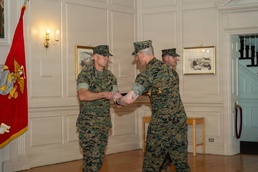
MARINE CORPS BASE QUANTICO, Va. —U.S. Marine Corps Sgt. Maj. Christopher Singley relinquished the Sword of Office to Sgt. Maj. Brandon Link during a relief and appointment ceremony on Marine Corps Base Quantico, May 28.
The ceremony was presided over by Brig. Gen. Dustin Byrum, Marine Corps Warfighting Laboratory commanding general, and signified the passing of the MCWL command senior enlisted leader duties and responsibilities.
Singley was the first sergeant major to fill the role of senior enlisted advisor at MCWL since 2009. During his two-year tenure Singley provided leadership and guidance to MCWL’s Marines and provided vital insight in the development of the concepts and combat capabilities shaping the future of the force.
“Sgt. Maj. Singley has been at the very heart of everything the Lab has accomplished during his time here,” said Byrum. “The perspective he brought to MCWL’s efforts have been invaluable.”
Reflecting on his time at MCWL Singley said he never could have predicted the unique nature of his role at the Lab. Addressing members of the command he said he was amazed at their dedication to supporting Marines of today and tomorrow.
“Every one of you invests so much to ensure we put the right tools into the right hands to make our Marines more survivable and lethal,” said Singley. “It was an honor to serve alongside you.”
Taking possession of the sword, Link accepted the position as MCWL senior enlisted leader.He expressed his appreciation of the role into which he has stepped and the challenges that lie ahead.
“I am impressed by everything you do,” said Link. “You are all true professionals and the master of your crafts, and I look forward to working alongside you.”
The Marine Corps Warfighting Laboratory/Futures Directorate examines future operating environments to generate threat-informed operating concepts and capabilities and, through experimentation, provides analytically supported recommendations to inform future force design and development activities.