KRIVOLAK, North Macedonia – Deep in rugged, unforgiving terrain, isolated units may run dangerously low on critical supplies. The weather may deteriorate, a viable landing zone may not exist, and advanced adversary anti-air systems can make traditional helicopter resupply flights a near-suicide mission.
In decades past, this nightmare scenario left commanders with grim choices.
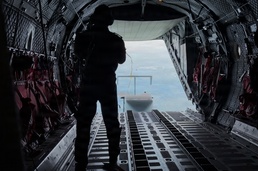
Today, a silent, unblinking autonomous glider, the Long-Range Grasshopper, drops from the sky. It navigates hundreds of miles through contested airspace to deliver a 500-pound payload exactly where it is needed, without risking the aircrew’s life.
This expendable, cost-efficient and highly accurate cargo delivery system executed its first operational drops in the U.S. European Command theater during Exercise Trojan Footprint 26 in Romania and North Macedonia, May 18, 2026.
Historically, commanders had to choose between requiring ground troops to carry bone-crushing weight into combat or face catastrophic shortages when cut off from the supply chain. The Grasshopper successfully demonstrated a shift in how the joint force approaches tactical sustainment.
Exercise Trojan Footprint is the largest U.S. and NATO special operations forces exercise in Europe. For U.S. Special Operations Command Europe, TFP 26 was far more than a routine rehearsal of established doctrine.
Exercises like TFP 26 serve as a dynamic, real-world testing ground. It is here that SOCEUR refines emerging tactics, tests cutting-edge technology like the Grasshopper, and develops the innovative operational concepts required to stay ahead of rapidly evolving global threats. This ongoing experimentation is actively transforming the way U.S. SOF approaches modern warfare.
The Grasshopper is designed specifically to expand options for long-range, low-cost, precision sustainment in contested or GPS-challenged environments, which is a growing requirement across the joint force.
"Logistics Unmanned Aerial Systems, like the Grasshopper represent a paradigm shift in resupplying forces in contested environments," said Maj. Jarret Flexman, SOCEUR’s chief of plans and exercises. "While legacy systems like the Joint Precision Airdrop systems are highly capable, they often face limitations in standoff distance and are susceptible to wind-induced inaccuracies. In contrast, the Grasshopper is not affected by winds and offers a standoff range of hundreds of miles.”
For the troops operating at the tactical edge, the introduction of autonomous, precision cargo delivery is a game changer. The system is built for contested logistics, high-threat resupplies and low-visibility SOF deliveries. However, its impact goes beyond just moving boxes. It enhances human performance on the battlefield.
"The primary benefit of the LRGH is operational agility," Flexman said. "By providing a reliable cache of on-demand supplies, the system relieves ground forces of the need to carry excessive weight, increasing their mobility. Furthermore, these resupply drones can provide a lifeline to isolated or disaster-affected people where inclement weather or the lack of a suitable landing zone would prevent traditional manned aircraft from providing support."
The dual drops in Romania and North Macedonia during TFP 26 offer a glimpse into the near future of military and humanitarian logistics.
Flexman added that he sees UAS being the backbone for warfare and global humanitarian efforts in the near future. He believes unmanned systems of all sizes will provide a persistent presence, offering commanders greater flexibility and expanded reach while significantly reducing risk to human life.
However, deploying these unmanned systems in high-risk situations will require deeper coordination and interoperability between allies and partners.
“The success of this exercise demonstrates our interoperability with our partner nations,” Flexman said. “It is a direct result of the seamless coordination between SOCEUR’s logistics directorate, the engineers at DZYNE Technologies and the vital partnership of our Allied forces.”