HILL AIR FORCE BASE, Utah— As mental health professionals from across Utah gathered for the University of Utah College of Social Work’s Continuing Education Unit Institute on May 13, behavioral health leaders from the military community took the virtual stage to shed light on a critical but often misunderstood population: Reservists and Guardsmen.
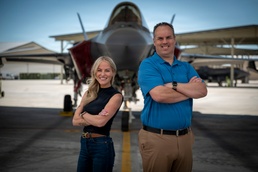
BreAnna Safsten, Director of Psychological Health with the 419th Fighter Wing, and Brandon Phelps, Director of Psychological Health with the 151st Air National Guard, represented the Reserve and Guard components at the live, interactive online event. Speaking to thousands of licensed mental health professionals, the pair presented during a segment titled “Invisible Wounds of Service: Military Families.”
The annual CEU Institute provides a platform for expert clinicians, policymakers, and frontline specialists to share insights and shape behavioral health practices in Utah. For Safsten and Phelps, it was an essential venue to brief civilian community partners who frequently oversee the mental health care of military personnel.
Central to their presentation was the concept of the "dual status" life, a unique balancing act that sets Guard and Reserve members apart from their active-duty counterparts.
“When people think of the military, they usually think of Active Duty,” Safsten explained during the presentation. “But our Reservists face unique and demanding challenges as they manage a dual status life: being a U.S. military service member and a civilian with a separate career. They exist in two demanding systems simultaneously.”
Safsten and Phelps highlighted the profound mental and emotional toll this balancing act can take on service members and their families. By informing civilian providers on these specific challenges, they aimed to improve the quality-of-care service members receive in the private sector while also highlighting the innate resilience and determination of the force.
“This was a great opportunity for us to advocate for Reservists and Guardsmen and their families as they navigate multiple systems and changing statuses,” Safsten noted following the event.
The presentation also offered practical insights into mitigating the risks associated with high-tempo military and civilian lives. The directors emphasized that maintaining psychological readiness requires proactive strategies on both an individual and family level.
“With multiple demands on one person and one family, the risk of burnout, poor motivation, fatigue, and sleep disruptions increase,” Safsten said. “Enhancing self-care, prioritizing quality time with family, setting time aside for meaningful activities, and learning ways to decompress and complete the stress cycle is crucial for our Airmen.”
As the military community nears the end of Mental Health Awareness Month, the message delivered at the CEU Institute serves as a timely reminder for service members: prioritizing psychological health is a vital component of mission readiness.
Leaders are encouraging personnel to take time to show up for themselves. Whether that means talking to a friend, leaning on a loved one, or reaching out to a professional who can provide confidential support, taking action is a sign of strength.