VICENZA, Italy — U.S. Army Southern European Task Force, Africa (SETAF‑AF) expanded its commitment to human performance with the launch of the Post‑Exercise Optimization Program, or POP, a new initiative designed to help Soldiers and civilians recover faster and maintain readiness after periods of high operational demand.
POP builds on the foundation established by the Optimizing the Human Weapon System program, which integrated human‑performance science into SETAF‑AF operations throughout 2024 and early 2025. OHWS data revealed a consistent pattern: After major exercises, readiness and sleep scores dipped sharply before gradually rebounding.
“My role is to help leaders make data‑driven decisions,” said Christie Cornell, Integrated Prevention Advisory Group lead for SETAF‑AF. “Data is telling us Soldiers perform at lower levels of readiness when certain stress factors are present.”
When OHWS ended in April, SETAF‑AF’s Integrated Prevention Advisory Group developed POP as a no‑cost, internally run successor. The program preserves the momentum of OHWS while expanding its reach across the formation.
POP is a fully developed, research‑supported, four‑week recovery program designed to counter the predictable dip in readiness following major exercises or operational missions. Each week includes a 60‑minute virtual workshop for leaders and a 90‑minute in‑person session for personnel, supported by a customized participant guide. The curriculum covers burnout prevention, sleep and recovery, high‑performance learning environments and Red Cross‑led mindful movement training.
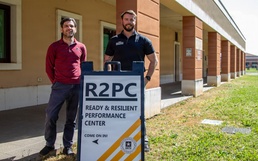
“We approach the human weapon system with expertise and background in performance psychology,” said David Baleno, a performance expert with the Ready and Resilient Performance Center. “Usually, people perform more poorly when under a high cognitive load.”
Baleno, who holds a master’s degree in sports psychology and is a certified mental performance consultant, emphasized that the program’s design mirrors how Soldiers must perform under pressure.
“By training the proper skills for rest, recovery, and recuperation, we can help apply skills like self-awareness, mindfulness, and breathing to optimize performance,” he said.
POP also draws on successful models across the joint force. The Navy SEALs’ mental toughness program and the Air Force’s True North initiative demonstrate that proactive stress‑management training can prevent burnout, improve performance and increase deployability. These are principles echoed throughout the POP curriculum.
“The weekly sessions are interactive,” said Lloyd Scharneck, R2PC manager. “We want participants to share what they're going through. That way, we can make necessary adjustments and build the skills which optimize their productivity now and maintain that level into the future.”
Hands-on sessions include nervous‑system regulation, mindfulness training, stress‑relief workshops, as well as assistance with stressor recovery. The program’s design reflects an ecological approach, addressing both individual stress responses and the leadership environments that shape them.
“Our team ensures units are aware of, and are actively utilizing, the resources the Army provides for performance optimization,” Cornell said.
Although program coordinators developed POP in response to trends observed during African Lion 2025, participation is open to any SETAF‑AF directorate, regardless of exercise involvement. OHWS data showed that even during periods of budget constraints and organizational change, personnel were able to bounce back when equipped with awareness and targeted interventions.
POP aims to accelerate that recovery.
“Any team experiencing high OPTEMPO [operational tempo], persistent stressors or post‑mission fatigue can benefit,” Cornell said. “We built POP to be flexible. Directorates can integrate it into their battle rhythm without disrupting mission requirements.”
SETAF‑AF leadership repeatedly emphasizes that people — not platforms — are the command’s decisive advantage. POP reinforces that priority by giving Soldiers and civilians the tools to recover quickly, manage stress effectively and sustain performance across demanding missions.
“POP strengthens the formation from the inside out,” Cornell said. “It ensures our people have what they need to recover, reset and stay ready for whatever mission comes next.”