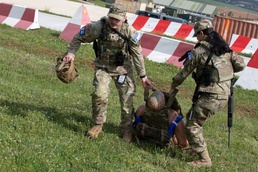
CAMP BONDSTEEL, Kosovo — Florida Army National Guardsmen assigned to Kosovo Force (KFOR) Regional Command-East Task Force Medical have become some of the first in Florida National Guard history certified by the state surgeon general to teach and validate Soldiers through the Defense Health Agency’s Deployed Medicine Combat Lifesaver curriculum.
The certification allows Task Force Medical instructors to conduct Combat Lifesaver training and award official course credit through the Deployed Medicine platform, expanding KFOR’s ability to train personnel in lifesaving skills at the point of injury.
Sgt. Benford Rosenfeldt and Sgt. Khaleel Germain, with Charlie Company, 53rd Brigade Support Battalion, and Sgt. James Klauder, with Headquarters and Headquarters Company, all with the 53rd Infantry Brigade Combat Team, have led the initiative in support of the brigade’s effort to expand the number of qualified Combat Lifesaver providers across the force.
“The brigade’s intent is really to expand the number of CLS providers to increase our mission capability and readiness,” Rosenfeldt said. “The importance of CLS is the ability to make change at point of injury so instead of being a bystander, you’re given the opportunity and knowledge to actually make a significant difference in your battle buddy’s outcome and we’re giving them the tools that empower our brothers and sisters we fight alongside.”
The Deployed Medicine platform provides standardized training resources and allows instructors to validate training completion while ensuring Soldiers receive official credit for the course.
“The Florida general surgeon signed off as me being a deployed medicine instructor, able to certify Soldiers in CLS and have them receive credit for it,” Rosenfeldt said. “Since February, we’ve taught two 40-hour CLS courses and multi-level training designed to reach learners with differing medical backgrounds.”
Combat Lifesaver training equips non-medical personnel with the skills to provide immediate care before advanced medical support arrives. The curriculum includes hemorrhage control, airway management, casualty assessment, and other lifesaving interventions designed to improve survivability at the point of injury.
“The Deployed Medicine curriculum allows us to set a pace for students of all knowledge levels, whether they’ve had exposure to medicine or not,” said Germain, medical operations noncommissioned officer for Task Force Medical. “You can take the class at your own pace. It gives a lot of dynamic resources to the instructors as well.”
Task Force Medical’s efforts extend beyond training U.S. Soldiers. Instructors have also trained contracted security personnel at Camp Bondsteel and are working with multinational partners interested in expanding Deployed Medicine certification opportunities within their own formations.
By increasing the number of certified instructors and Combat Lifesaver-qualified personnel, the program strengthens interoperability across KFOR and enhances the force’s ability to respond to medical emergencies while supporting the mission to maintain a safe and secure environment and ensure freedom of movement for all people in Kosovo.
For Rosenfeldt, the opportunity to teach the course is a chance to share a program that influenced his own career path.
A former flight medic with nearly 20 years of medical experience, Rosenfeldt said a Combat Lifesaver course he attended in 2009 inspired him to pursue medicine and helped shape the career he has today.
Germain said the deployment has also broadened his professional perspective as he balances operational responsibilities with medical training.
“I’m currently working in an operations role here at the Bondsteel clinic, and working on the operations side has opened my eyes to anticipating problem sets and finding solutions so there aren’t any big hiccups,” Germain said. “This deployment is definitely going to help the knowledge base I want to build, especially with my end goal in medicine to get into a physician assistant program.”
“Many hands make light work,” Rosenfeldt said. “We’re very passionate about medicine, so getting the opportunity to make a difference here and possibly put a new thought process in some of these Soldiers who want to pursue medicine in either the military or civilian sector is quite rewarding.”