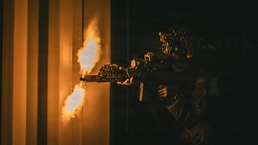
FORT MAGSAYSAY, Philippines — The Joint Pacific Multinational Readiness Center-Exportable (JPMRC-X) exercise, the second phase of the bilateral Exercise Salaknib, concluded May 20, 2026, after weeks of rigorous, intensive training that tested the capabilities of a five-nation coalition across the complex, archipelagic terrain of Northern Luzon.
This is JPMRC-X, a rigorous force-on-force training event that brings the U.S. Army’s premier combat training center experience to the Indo-Pacific region, allowing forces from the U.S., Philippines, Australia, New Zealand, and Japan to strengthen their ability to operate as a unified force.
“JPMRC-X is about building readiness where it matters most,” said Col. Matthew Leclair, commander for 196th Infantry Brigade, which executes the JPMRC-X program.
By deploying the combat training center directly to the region, U.S. and allied forces can rehearse complex, multi-domain operations in the exact environment they may be called on to defend.
“It forges a level of readiness and interoperability that you simply can’t replicate anywhere else,” added Leclair.
That readiness was immediately tested on May 8, as Soldiers with 2nd Battalion, 21st Infantry Regiment, 3rd Mobile Brigade, 25th Infantry Division, maneuvered through mountainous terrain to conduct critical route reconnaissance to support follow-on multinational operations.
The exercise demonstrated that interoperability extends beyond the battlefield. On May 13, U.S. Soldiers from the 448th Civil Affairs Battalion and the 25th Infantry Division joined their counterparts from the Philippine Army Civil-Military Regiment to tour the Philippine Disaster Resilience Foundation in Clark, strengthening relationships in support of future humanitarian assistance and disaster response operations.
Simultaneously, tactical operations intensified. As Soldiers from the 2nd Battalion, 27th Infantry Regiment, pushed into their objectives near Laur, they trained to identify and respond to enemy UAS threats while preparing defensive battle positions.
The culminating events of JPMRC-X in the Philippines stripped operations down to their rawest elements, forcing Soldiers to hone their fundamental skills under immense pressure. For Command Sgt. Maj. Michael Olivas, senior enlisted advisor for the 3rd Mobile Brigade, witnessing the force operating at the dirt level was a testament to their readiness.
"This is tough, realistic training," Olivas said. "We’re asking our Soldiers to execute fundamental tasks such as shoot, move, communicate, and sustain under the most challenging conditions west of the international date line."
Throughout the rotation, Olivas witnessed Bronco Soldiers execute grueling six- to 10-kilometer dismounted movements in the sweltering Philippine heat. Despite the high endurance toll, those same Soldiers rapidly established battle positions and responded to attacks by the opposing force.
The sheer intensity of the exercise also forged incredible leadership at the lowest echelons.
“I personally saw our medics, Soldiers below the rank of sergeant, take charge and completely own their fight regarding casualties," Olivas noted. "They reduced further injuries and battlefield effects, preserving as much combat power as possible so the formation could pursue the [opposition force] daily."
The battlefield was a true multi-domain environment. On May 16, artillerymen from the 3rd Battalion, 7th Field Artillery Regiment, calculated fire data for their M119 Howitzers, which were rapidly positioned by CH-47 Chinook helicopters from the 25th Combat Aviation Brigade. In the defense, infantrymen from 2-27 IN prepared to engage armored threats with the Carl Gustaf 84mm recoilless rifle. These combat arms were sustained by critical logistics resupply missions that kept food, water, and ammunition flowing to frontline units.
Multinational interoperability remained a central focus throughout the exercise. Olivas highlighted an incident that epitomized this coalition strength: following an enemy drone strike on a combined patrol, a Philippine Army Private carried two U.S. Soldiers to a combined Casualty Collection Point, rendering immediate first aid before medics could even attend to the patients.
The partnership also extended into tactical operations. Philippine Scout Rangers attached to the U.S. formation served as invaluable mentors in the unforgiving environment.
"They were the utmost professionals in coaching our Soldiers on survivability through the jungle environment," said Olivas. "They taught the hasty construction of basic but highly effective dug-in fighting positions, well concealed and utilizing cover to their advantage."
Reflecting on the awesome amount of leadership and partnership displayed across the entire area of operations, Olivas emphasized that the rotation proved the Brigade is ready for whatever comes next.
"Their professionalism and grit,” Olivas concluded, "are the foundation of our combat-credible force."
The capstone event of the exercise took place on May 17 with “Operation Sama Sama,” a complex 5-nation air assault mission.
“Planning ‘Sama Sama’ gave me a deep appreciation for multinational interoperability,” said Capt. Nathaniel Fairbank, commander of Headquarters and Headquarters Company, 3rd Mobile Brigade, who led the operation. “Every step required seamless communication and trust between allies and partners. The mission’s successful execution is a testament to the strength of our bond.”
The operation required intricate coordination across multiple international units. An integrated ground force of U.S., Australian, and New Zealand troops secured the landing zone, paving the way for U.S. aircraft to fly in a combined assault force made up of Philippine and Japanese soldiers. The entire maneuver was capped off by the deployment of a U.S. High Mobility Artillery Rocket System to execute a dry fire mission.
Leaders from the Armed Forces of the Philippines and the Japan Ground Self-Defense Force watched the operation in person as their soldiers boarded U.S. aircraft for the assault.
The operation served as a powerful realization of the exercise's namesakes. Salaknib, which means "shield" in Ilocano, and Sama Sama, meaning "together" in Tagalog, were reflected throughout the operation. By integrating forces from five nations into a single, complex maneuver, the coalition showcased the mutual understanding and tactical interoperability required to build an effective, unified defense in the region.
From night reconnaissance to direct-action raids, every event during JPMRC-X was designed to build a force with greater lethality, agility, and interoperability, prepared to respond to any crisis or contingency across the Indo-Pacific.
"At the end of the day, alliances and technology don’t win on the battlefield. Soldiers do," Olivas said. "The sweat equity these men and women built here in the jungle alongside our multinational partners ensures we are ready for whatever comes next."
JPMRC-X, as part of Exercise Salaknib, integrates U.S., Philippine, and partner forces in realistic scenarios to enhance combined operational effectiveness, refine multidomain operations, and strengthen regional readiness in the Indo-Pacific.