MAXWELL AIR FORCE BASE, Ala. — As operational demands continue shifting across the joint force, Air University is adjusting how it prepares airmen and guardians for assignments shaped by emerging technology, joint planning and compressed decision timelines.
Chief Master Sgt. Raun Howell, command chief for Air University, said the university’s responsibility goes beyond developing airpower expertise. Future warfighters also have to understand how airpower fits into the broader joint fight and how decisions made across domains shape operations as a whole.
“We don’t fight wars in a vacuum anymore,” Howell said. “We need experts in airpower, but they need to see how it fits into the broader picture.”
As America’s Airpower University, Air University connects education, research, doctrine development and operational problem-solving efforts across the enterprise to support combatant commands, Headquarters Air Force and the Joint Staff. Howell said maintaining that connection to the operational force remains important as mission requirements and operational environments continue changing.
“We have a long history of creating and building and growing joint, strategic, air-minded warriors,” Howell said. “But as things continue to evolve, we need to build on our curriculum and never be satisfied where it’s at.”
Part of that effort includes increased focus on joint planning, regional studies, operational problem-solving and artificial intelligence. Howell said the goal is to better prepare students for the environments they’ll enter after graduation, whether they move into operational staffs, combatant commands or future leadership roles across the force.
“How do we ready them with the AI they are going to be using in that respect of war?” Howell said. “How do we get them immersed within that region they’re going to be assigned so they are ready from day one?”
At Squadron Officer School, curriculum updates now introduce captains to joint planning processes and joint warfighting concepts earlier in their careers. Howell said exposing officers to those concepts sooner allows them to build operational understanding over time instead of waiting until senior developmental education.
“What we found out is that we need our captains immersed in that now,” Howell said. “So that way they continue to build until they are at the strategic O-6 and O-7 levels.”
Howell also said Air University’s role extends beyond education and includes research connected to challenges facing the Air Force and joint force. Across the enterprise, faculty members, students and subordinate organizations are collaborating on efforts tied to operational requirements, emerging technologies and future force challenges.
“We are studying and researching and trying to solve the Air Force’s most challenging problems,” Howell said. “We should have a research team that is the research arm for the Air Force working on solving those problems.”
That collaboration includes connecting education, research, wargaming and doctrine development efforts across Air University instead of operating independently from one another. Howell said that approach helps different schools and organizations contribute to shared operational problem sets across the force.
“All of our different schools aren’t operating in stovepipes,” Howell said. “They are one Air University for the Air Force.”
Howell also said Air University has to continue adjusting educational methods as artificial intelligence and emerging technologies become more common across operational environments.
“We can’t operate out of a hardcopy textbook anymore when our adversaries are implementing AI at all levels,” Howell said. “We must modernize.”
For Howell, the mission is making sure future warfighters are prepared for the environments they’ll face long before they arrive in them.
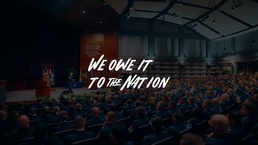
“We need to continue to push forward, evolve and modernize because we owe that to the enterprise and we owe that to the nation,” Howell said.