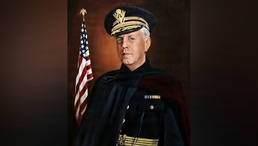
More than 100 years ago during World War I, then 1st Lt. Patrick Madigan saw the human toll of combat trauma and the lasting effects of what was then called “shell shock.” Then a regimental surgeon with the 2nd Battalion, 64th Infantry Regiment in France, Madigan’s experience pushed him towards neuropsychiatry, a field still developing at the time.
Serving up through World War II and attaining the rank of colonel, Madigan’s legacy shaped how the U.S. Army cared for Soldiers by arguing that mental fitness mattered as much as physical strength.
Known as the “Father of Army Neuropsychiatry,” Madigan pushed U.S. Army medicine to strengthen mental health support for the force. His legacy still influences the work done at the facility named in his honor, the Madigan Army Medical Center, where care is directly tied to military readiness, recovery, and resilience.
Madigan was born in Washington, D.C., Feb. 8, 1887, as one of six children. Inspired to enter the medical field by family members who were medical professionals, he attended Georgetown University for college and medical school.
World Wars shaped his legacy
With his career spanning the early 20th century through World War II, Madigan’s work helped the U.S. Army build a stronger, more medically prepared force.
He joined the U.S. Army Medical Corps as a first lieutenant in 1917, according to his official biographical documents in the U.S. National Library of Medicine.
In the years that followed his World War I experience, he served at major military hospitals and clinics, including Walter Reed General Hospital and Sternberg General Hospital, Manila, Philippines. At Walter Reed, he served as chief of neuropsychiatry for six years, further deepening his understanding of the importance of mental health to mission readiness.
His most important work came as the U.S. Army prepared for and entered World War II.
From 1940 into 1941, he served on the staff of the surgeon general of the U.S. Army, overseeing standards for recruits and bringing the best professional opinion about psychiatric standards for recruits. When the U.S. Army recognized neuropsychiatry needed to be its own division, he was the natural choice, according to the U.S. Army Medical Center of History and Heritage.
Following his work with the surgeon general’s office, he became chief of the newly established neuropsychiatry branch. In that role, he pioneered how the U.S. Army addressed mental health, by assigning neuropsychiatrists to training centers so the service could identify mental health issues early, help troops adjust to military life, and reduce problems that could hurt training and combat effectiveness.
Madigan believed the U.S. Army could not afford to separate combat effectiveness from behavioral health. He supported better treatment for combat exhaustion, steps designed to reduce psychiatric casualties and return more soldiers to duty. He also backed stronger coordination between hospitals and the surgeon general’s office, better record keeping, and tighter oversight of rehabilitation.
Madigan died on May 8, 1944, at the age of 57.
Namesake carries on through award-winning medical center
The U.S. Army honored his legacy in 1944 by redesignating Fort Lewis General Hospital as Madigan General Hospital after his death. The naming recognized his influence on military medicine at a decisive moment in history.
Madigan Army Medical Center at Joint Base Lewis-McChord, reflects that connection through a mission that is to generate “a ready medical force and a medically ready force.” The hospital bearing his name now delivers that mission across trauma care, specialty care, graduate medical education, and behavioral health — with accolades recognizing the hospital’s impact on military health.
The medical center earned an “A” in the Leapfrog Group Hospital Safety Grade for consecutive reporting periods: spring 2025, fall 2025, and spring 2026, reflecting sustained excellence in patient safety and harm prevention.
Madigan’s Family Medicine Residency Program won the 2025 Uniformed Services Academy of Family Physicians Outstanding Achievement in Scholarly Activity award, which recognized it as the top producer of research and scholarly work among all military family medicine residencies.
Madigan serves more than 100,000 service members, family members, and retirees and stands as one of U.S. Army medicine’s flagship centers on the West Coast. It is also one of the U.S. Army’s few Level II trauma centers.
The hospital honors its namesake through not only its high-quality, nationally recognized care — but down to its insignia featuring a fir tree which, according to the center’s website, suggests “a symbol of life, particularly of the spirit and mind, and alludes to the neuropsychiatric field of medicine in which Col. Patrick Sarsfield Madigan, M.D., served so prominently and for whom the medical center is named.”