DALLAS — The American Southwest is an economic powerhouse driven by rapid population growth and massive industrial output. At the foundation of this regional strength are two fundamental elements: dirt and water.
Since 1937, the U.S. Army Corps of Engineers Southwestern Division has mastered these elements to build national resilience. From the heartland to the Gulf Coast, the division harnesses water to sustain communities and generate power, while shaping dirt into the ports, navigable channels, and flood risk management systems that reduce risk to communities and keep global commerce moving.
Today, the division is aggressively executing the “Building Infrastructure, Not Paperwork” initiative. Launched in February by Assistant Secretary of the Army for Civil Works Adam R. Telle, the initiative represents a fundamental shift in how Civil Works is delivered, moving the focus away from bureaucratic processes and toward accelerating project delivery. It acts as a positive operational mandate: adopting a culture of disciplined urgency, empowering world-class technical experts to make decisions, and focusing squarely on project outcomes.
"The American people expect us to deliver results, not get bogged down in internal processes," Telle said. "We have an obligation to ensure the time and resources entrusted to us are focused on accelerating the delivery of high-impact projects that provide the greatest benefit to the communities we serve."
For the Southwestern Division, this isn't just a new policy, it's a catalyst for immediate action.
"Our mission is to turn dirt and water into the infrastructure that powers our economy and supports national resilience," said Brig. Gen. George H. Walter, Southwestern Division commanding general. “The Army’s drive to accelerate Civil Works engineering, design, and construction empowers our teams to act with disciplined urgency. We are trusting our experts to find the most direct path to delivering the flood risk management, water supply, and navigation projects our communities rely on."
Executing this mission across a vast, multi-state footprint requires a synchronized, regional approach. The division’s four civil works districts — Galveston, Fort Worth, Tulsa, and Little Rock — operate not as isolated entities, but as an interconnected network managing more than 70 multi-purpose reservoirs and thousands of miles of navigable waterways.
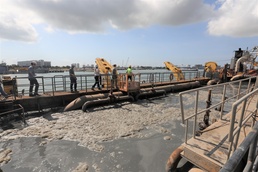
This regional network begins at the Texas coast, a vital artery for the entire country. Here, the Galveston District accelerates dredging operations and advances coastal storm risk management across more than 25 ports, including the Houston Ship Channel. This ensures Texas remains the primary hub for U.S. energy exports.
“The Texas coast is a critical artery for commerce, energy, and the infrastructure that powers the nation’s economy and strengthens national security,” said Col. David W. Dake, Galveston District commander.” said Col. David W. Dake, Galveston District commander. “By optimizing our resources and cutting through administrative requirements, we are accelerating construction schedules. Our priority is delivering the resilient coastal infrastructure necessary to keep vital ports fully operational.”
The coastal economic engine is directly supported by the stability of the inland watersheds managed by the Fort Worth District. Supplying water to millions of Texans and operating more than 20 reservoirs, this team tackles the demands of one of the fastest-growing populations in the country. By prioritizing execution, they ensure critical dam modifications and water supply operations stay ahead of regional growth, reducing flood risks before water ever reaches the coast.
Further north and east, the regional economy is fueled by the Tulsa and Little Rock districts, which jointly operate the McClellan-Kerr Arkansas River Navigation System. This nearly 450-mile commercial superhighway connects the heartland’s agricultural and manufacturing markets directly to global shipping routes. Alongside keeping this continuous navigation artery open, these two districts manage dozens of lakes and major hydropower plants, generating clean energy for hundreds of thousands of homes while mitigating millions of dollars in flood impacts annually across the region.
"Our people are our greatest asset. The unmatched work ethic of the Tulsa District team is what keeps the MKARNS moving and our hydropower plants delivering reliable energy to the nation." said Col. Jessica Goffena, Tulsa District commander. "Whether we are performing critical lock maintenance on the McClellan-Kerr Arkansas River Navigation System or upgrading our hydropower facilities, our focus is on executing projects that keep commerce flowing and the lights on."
As the American Southwest continues its rapid growth, the infrastructure managed by the Southwestern Division remains the foundation of this economic powerhouse. By fully executing the “Building Infrastructure, Not Paperwork” initiative, the division and its four districts are ensuring that dirt and water continue to be transformed into the national power that drives America’s heartland and keeps the global economy moving.