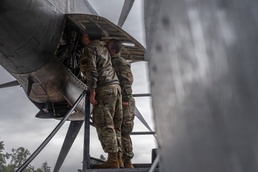
RAMSTEIN AIR BASE, Germany – The wind blows through the flightline carrying smells of fuel, rain and hot metal across rows of aircraft waiting for another day in the air. Beneath these wings, maintainers work with purpose, their hands are steady in the cold, moving with practiced precision as they inspect, repair and return these aircraft back to the fight.
Most people see the C-130J Hercules aircraft as a machine. The Airmen of the 86th Aircraft Maintenance Squadron see more of its internal complexity.
“Every airplane has its own personality,” said Tech Sgt. Brett Blodgett, 86th AMXS C-130J expeditor. “Certain planes consistently break for the same issues, some break for random reasons. You got to learn to treat them right and to sweet talk the aircraft.”
That comment drew laughs from his Airmen around him, but underneath that humor sits a reality that maintainers know all too well.
Maintainers speak about the aircraft the same way mechanics speak about trucks or old sailors speak about ships. Some aircraft are dependable, some are stubborn and some demand more grace than others.
“The engine demands patience, you can tell if a real person cares about the details,” said Airman 1st Class Ramy Farahat, 86th AMXS aerospace maintenance journeyman. “There’s a lot of tight corners and spaces you have to get into, it can be hard to see what you’re doing. The last thing you want to do is lose something in the engine.”
Those details can mean the difference between a routine repair and a grounded aircraft. On the newer airframes, such as the C-130J, maintainers rely heavily on diagnostics and computer data to identify potential issues before they become larger complications.
“The J-model is a very sophisticated airframe,” Blodgett said. “There’s a lot of trend data we can keep an eye on, so we know which engines are getting older or looking at needing more maintenance.”
Even with advanced systems in the modern age, both maintainers agree experience still matters. Troubleshooting cannot be fully learned from technical training alone.
“The majority of the aircraft I learned better by physically doing,” Blodgett said. “Anyone can read a book and understand the theoretical side of an airplane, but actually seeing how all the components work together and affect each other is something that needs to be shown rather than read.”
The work can quickly shift from routine to urgent. Bird strikes, electrical faults and mechanical failures can appear without warning. The first sign of a problem is not always visible.
“You might hear something off,” Farahat said. “Like flaps chattering or a gearbox not going down smoothly, then you know something’s probably broken.”
Other times, the signs arrive through smell.
“If a bird strikes through and goes into the engine, you’ll smell burnt chicken through the AC system.” Blodgett said.
Moments like that are a part of the unpredictability crews learn to adapt and help shape their resilience.
“You have to be able to laugh,” Farahat said. “If you can’t laugh at the small things that happen, you’re going to have a rough time.”
That state of mind often turns into a deeper connection within the career field itself. For Blodgett, maintaining the aircraft eventually became increasingly personal. He was assigned a single aircraft he spent countless hours with as a dedicated crew chief earlier in his career.
“That was my baby,” he said. “I took pride in making my plane the sharpest, cleanest and nicest plane.”
On the surface, aircraft maintenance is about the engines, wiring and wrench turning. Beneath that though, maintainers are describing something familiar; aircraft develop patterns alongside quirks and learning how to recognize them is a part of the job.
“Both have a lot of problems,” Farahat laughed. “But, both respond better when somebody actually takes the time to understand them.”
As another aircraft taxis across the flight line, the maintainers step back from the noise and watch it disappear into the gray morning sky. Within hours though, it will return for another inspection, another repair and another long night for the Airmen shrouded beneath its wings.