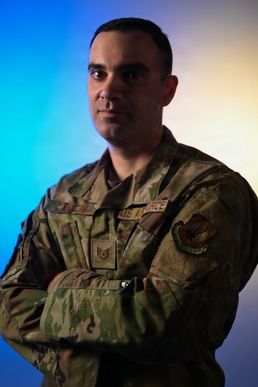
AVIANO AIR BASE, Italy – On April 20th, U.S. Air Force Tech. Sgt. Joseph Dixon, 31st Force Support Squadron education center civilian training manager, was driving his daughter to fencing practice when he suddenly encountered the immediate, devastating aftermath of a motorcycle crash. Spotting a panicked crowd gathering around the critically injured rider, Dixon threw his car into park, ripped a first-aid kit from his backseat, and charged into the scene to save a life.
“His sweater was all torn to shreds,” said Dixon. “His pants were ripped, and his shoes flew off about 20 feet in the opposite direction of the accident. He was hit at a pretty good speed.”
Drawing on 17 years of military experience and a Tactical Combat Casualty Care course he had completed just three days prior, Dixon immediately conducted a rapid blood sweep. Finding no clear signs of neck injuries, he warned the conscious but non-English-speaking victim before applying intense, direct pressure to the massive leg wound.
"I noticed that nobody was paying attention to his left leg, the only thing keeping it intact was his bone," Dixon said, noting the severe trauma. “I slammed my hands down and applied pressure to his leg, expecting him to kick in pain,” said Dixon. “But the crazy thing was that he didn’t react at all.”
As his hands became covered in blood, Dixon noticed another immediate, deadly threat: a strong smell of gasoline. The motorcycle's full tank had ruptured and was dumping fuel less than two feet away from the vehicle, which was still running.
Recognizing the extreme fire hazard, Dixon took command of the chaotic scene. He cordoned off the area, directing bystanders to step back. When he opened the car to shut off the engine, he found a young girl and her puppy still inside. Dixon quickly evacuated them to a safe distance.
“When I went back to check on his leg, it was cold,” said Dixon. “I also checked his stomach, and it was also cold. I realized he was going into shock, so I had a bystander take off my sweater while I was still applying pressure to his leg to wrap around the victim to keep him warm.”
Dixon applied pressure on the wound until local Italian medics arrived.
“It was probably only 10 to 15 minutes of waiting for their arrival, but it felt like forever,” said Dixon. “I was making sure that not only was this man being taken care of, but also all the bystanders were out of harm’s way of the gas leak, which would have been very bad if it ignited somehow.”
When emergency responders took over, they confirmed Dixon's rapid response had stabilized the patient and likely saved his life. The adrenaline eventually wore off during the quiet drive to the fencing center, leaving Dixon in a state of shock himself.
“I felt like a zombie,” said Dixon. “Normally I would play some music to pump up my daughter, but this time it was a quiet ride. No music, no nothing. I was overly cautious on the road, trying to process what had just happened.”
Days after the incident, Dixon reflected on the event, and he credited his military readiness for his ability to act without hesitation.
“All that training that you think is redundant, it’s not,” Dixon said. “You don’t think it could happen to you, but it’s possible. There was no fear. It was just, ‘I need to react, and I need to help this man out.’”