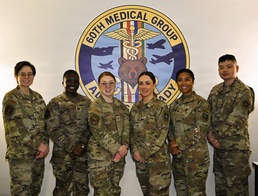
The 60th Medical Group at David Grant USAF Medical Center is enhancing mission readiness and returning time to Airmen through a new Continuous Medical Readiness (CMR) model that consolidates required medical tasks into a single day.
Established in October 2025, this streamlined approach reduces time away from duty, accelerates deployment readiness updates, and improves the patient experience across multiple specialty clinics involved in individual medical readiness. The CMR model helps Airmen stay current on expiring requirements, such as the Periodic Health Assessment, Occupational Health Exams, and dental exams.
Instead of coordinating multiple readiness appointments throughout the year, Airmen can complete required actions during a single coordinated visit. A dedicated CMR team guides members through the process, managing scheduling, documentation, and medical record updates in the Aeromedical Services Information Management System (ASIMS).
“We are proactively pursuing medical readiness,” said Capt. Isabella M. Cordova, officer in charge of the CMR Cell. “Medical readiness remains a core responsibility for Airmen and an essential component of mission capability.”
To support the initiative, the CMR Cell recently relocated to a dedicated clinical space, creating a centralized location for Airmen to complete their readiness sequence.
“Having a separate, dedicated space solidifies the program and shows that we are here to stay,” said Capt. Chantel M. Belfon, a clinical nurse with the CMR Cell. “This move improves patient flow and clarifies the process for everyone involved.”
Following discussions with Lt. Gen. John J. DeGoes, U.S. Air Force Surgeon General, leadership highlighted the model’s potential as a scalable approach that could help inform readiness efforts at other military treatment facilities across the Air Force medical enterprise.
Early results show the model is improving efficiency. An internal CMR Cell analysis revealed that each Airman completing their CMR day saves approximately 19.5 man-hours that would otherwise be spent scheduling and attending separate appointments. The process also accelerates deployment readiness updates and reduces administrative delays for Airmen preparing for operational requirements.
“Within three days, their ASIMS Case Summary was updated to reflect they were deployable, and all notes from the clinics were finalized,” Cordova said. “Everything is faster and much more efficient.”
Feedback from units has highlighted the program’s improved clarity, predictable timeline, and the confidence it provides to Airmen.
“We shouldn’t underestimate the value of peace of mind,” Belfon noted. “It’s important for members to have confidence in the process. With this model, they can move through a guided process knowing everything will be completed correctly.”
The initiative reflects ongoing efforts across the Military Health System to improve patient-centered care, reduce administrative burden, and ensure Airmen can maintain medical readiness while minimizing time away from their units and families.
In alignment with the Department’s Culture of Fitness initiative, the CMR Cell partnered with Physical Therapy and Nutritional Medicine to integrate educational sessions focused on overall health and wellness. Beginning in the first quarter of next year, Airmen will attend readiness briefings during their CMR day, using scheduled intervals between appointments to build knowledge in fitness, injury prevention, and nutrition. For squadron commanders, the message is simple.
“Let us take care of it,” Cordova said. “You book one appointment, and we’ll make the medical readiness happen.”
By demonstrating measurable improvements at the local level, the CMR model at DGMC may serve as a blueprint for enhancing force-wide readiness across the Military Health System.
The CMR Cell is located on the first floor of DGMC. Airmen can check their individual medical readiness status and coordinate with their Unit Health Monitor or Unit Deployment Manager when they are 30 to 60 days from expiring requirements.
Ultimately, the CMR model supports the Department’s global readiness posture by transforming medical readiness from a recurring administrative challenge into a more predictable and streamlined process for the Wing, the hospital, and the Airmen it serves.