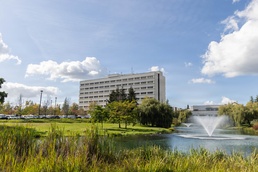
MADIGAN ARMY MEDICAL CENTER, Joint Base Lewis-McChord, Wash. -- Madigan Army Medical Center has taken a significant step forward in improving patient care and clinical efficiency with the introduction of its Pulmonary Nodule Registry assisted by cutting-edge artificial intelligence technology. This innovative initiative is designed to better identify, track, and manage patients with potential pulmonary nodules—small growths in the lung that are often discovered incidentally during imaging performed for unrelated medical concerns.
In many cases, pulmonary nodules are identified on chest X-rays ordered for reasons such as evaluating injuries after a fall or assessing trauma following a motor vehicle collision. While many nodules are benign, some may represent early signs of more serious conditions, including lung cancer. As a result, timely identification and follow-up are critical to ensuring appropriate care and improving patient outcomes.
However, the challenge lies in the sheer volume of imaging studies performed in a busy clinical environment. With thousands of chest X-rays conducted for a wide range of indications, it can be difficult for healthcare teams to consistently track incidental findings and ensure that every patient receives the necessary follow-up. Even in highly organized systems, the risk of delays in reviewing imaging results or contacting patients remains a concern.
Recognizing this challenge, Madigan Army Medical Center established the Pulmonary Nodule Registry as a centralized system to capture and monitor these findings. The registry serves as a safety net, ensuring that patients with identified nodules are not lost to follow-up and that appropriate next steps—such as additional imaging, specialist referrals, or ongoing surveillance—are initiated in a timely manner.
“This development is really going to increase efficiency in the care our providers deliver, increase access to care,” said Rick Barnhill, Chief Health Information Officer (CHIO) at Madigan. His trademark is developing technical solutions that solve common problems and expanding the capability to all locations. Early in the COVID-19 pandemic in 2020, Mr. Barnhill and the data analytics team promptly worked with the lab and created an automated COVID test result report in the MHS GENESIS data warehouse. The finalized product was adopted for the entire MHS. “Our team’s goal is not just for patients here at Madigan, but to utilize this tool in hopes this innovation paves the way for wider usage and increases patient experience and care we provide.”
To further enhance the effectiveness of this registry, the center’s informatics team is leveraging cutting-edge artificial intelligence. Specifically, they are utilizing the Ask Sage Large Language Model, a Personal Health Information (PHI)-compliant AI tool designed to operate securely within healthcare environments. This technology plays a crucial role in helping clinicians manage the large volume of data associated with tracking pulmonary nodules.
The AI system analyzes multiple factors, including a patient's medical history, demographic information, imaging findings, and relevant lifestyle details, such as smoking history. Using this information, it helps rank-order patients based on their likelihood of requiring urgent follow-up care. This prioritization allows healthcare providers to focus their attention and resources on those patients who are at greatest risk, ensuring that critical cases are addressed promptly.
Importantly, the use of AI in this context does not replace clinical judgment. Instead, it serves as a powerful decision-support tool, augmenting the capabilities of healthcare professionals and helping them work more efficiently. By reducing the administrative burden associated with manually reviewing and sorting cases, clinicians can dedicate more time to direct patient care and informed decision-making.
This initiative reflects a broader commitment by Madigan to embrace innovation in support of its mission. By integrating advanced technologies into clinical workflows, the organization aims to improve both the quality and efficiency of care delivered to its patients. The Pulmonary Nodule Registry is a clear example of how data-driven approaches can enhance patient safety and streamline complex processes within modern healthcare systems.
As part of the Defense Health Agency (DHA), Madigan Army Medical Center plays a vital role in supporting the health and readiness of service members, their families, and military retirees. Ensuring timely diagnosis and treatment of potentially serious conditions is essential not only for individual patient outcomes, but also for overall force readiness.
The adoption of tools like the Ask Sage Large Language Model, certified and provided by the DHA J-6, underscores the organization’s focus on secure, efficient, and forward-thinking solutions. “By leveraging artificial intelligence in a responsible and targeted way, Madigan is positioning itself at the forefront of military healthcare innovation,” Barnhill Said.
Looking ahead, initiatives like the Pulmonary Nodule Registry may serve as a model for other healthcare systems seeking to improve the management of incidental findings and enhance patient follow-up processes. As technology continues to evolve, the integration of AI-driven tools into clinical practice is likely to become increasingly common, offering new opportunities to enhance care delivery and improve patient outcomes.
Through its commitment to innovation, collaboration, and patient-centered care, Madigan Army Medical Center continues to demonstrate leadership in the evolving landscape of modern medicine, ensuring medical readiness for service members and beneficiaries, anytime - anyplace.