Ticks: How to avoid them and what to do if bitten
Fort Knox
Date: 05.01.2026
Posted: 05.01.2026 11:07
News ID: 564119
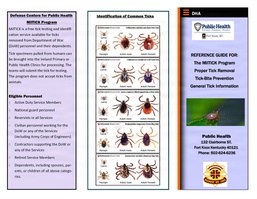
As summer approaches, members of the Fort Knox community are reminded to be on the lookout for ticks. It is crucial to be vigilant and take preventive measures to protect against ticks and tick-borne illnesses.
Here are essential steps to take to stay safe this season:
Avoidance:
Ticks are commonly found in wooded areas, tall grass, and leaf litter. Taking steps to manage surroundings can significantly reduce exposure.
- At Home:
- Regularly mow the lawn and keep shrubs trimmed.
- Remove brush and leaf litter from the yard.
- Create a 3-foot-wide barrier of wood chips or gravel between the lawn and wooded areas.
- Keep playground equipment and family activity areas in sunny locations, away from yard edges and trees.
- Outdoors:
- Avoid walking through overgrown, wooded areas and stick to the center of trails.
Repel ticks effectively:
Use repellents and protective clothing to create a barrier against ticks.
- Clothing:
- Wear light-colored clothing, including long-sleeved shirts and long pants.
- Tuck shirts into pants and pant legs into socks or boots.
- Repellents:
- Apply an EPA-registered insect repellent containing DEET, Picaridin, or IR3535.
- For extra protection, treat clothing and gear with products containing 0.5% permethrin. Permethrin should not be applied directly to the skin.
- Apply pesticides to the grassy areas around the home. On-post residents should consult with Preventive Medicine staff to survey your area for ticks and determine if chemical control is needed. Applying pesticides should be considered only as a last resort. If living off post, it is best to hire a professional pest control company.
- Always read and follow product label instructions when using repellents and pesticides.
Check for ticks:
Check for ticks immediately after being in potentially tick-infested areas.
- Check the body thoroughly, paying special attention to areas like the scalp, behind the ears, armpits, behind the knees, and groin area.
- Check clothing and pets, as ticks can be carried into the home on them. Placing clothes in a dryer on high heat for 10 minutes can kill any hidden ticks.
- Take a shower within two hours of coming indoors to wash off and more easily find crawling ticks.
If bitten by a tick:
If you find a tick attached, remove it as soon as possible. Prompt removal can help prevent the transmission of disease.
- Use fine-tipped tweezers to grasp the tick as close to the skin’s surface as possible.
- Pull upward with steady, even pressure. Do not twist or jerk the tick, as this can cause the mouthparts to break off and remain in the skin.
- After removing the tick, thoroughly clean the bite area and your hands with rubbing alcohol or soap and water.
- Do not use methods like nail polish, petroleum jelly, or heat to make the tick detach. This can cause the tick to regurgitate into the bite site, increasing the risk of infection.
After removal, monitor the bite site and your health. While most tick bites are harmless, it is important to watch for symptoms of tick-borne illness, which can include fever, chills, headache, body aches, or a rash. If these symptoms develop, consult a physician. The tick can also be submitted through the MilTICK program for testing (see instructions in the images above).