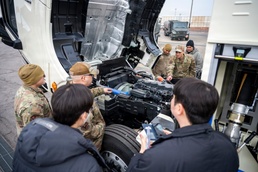
OSAN AIR BASE, Republic of Korea — The 51st Fighter Wing is renewing its refueler fleet with the arrival of new Korean refueler vehicles, with the first trucks delivered to Osan Air Base over the past two months, marking the beginning of a peninsula-wide modernization effort to enhance aircraft refueling capability and flight line efficiency.
U.S. Air Force installations across the Korean Peninsula are receiving the new Korean-built refuelers as part of an effort to modernize ground fueling operations and strengthen mission readiness.
“The KRVs provide a locally procured option that increases availability and allows us to support aircraft operations more effectively,” said U.S. Air Force Tech. Sgt. Henry Nelson, 51st Logistics Readiness Squadron fuels distribution noncommissioned officer in charge.
The new vehicles introduce improved reliability and maintainability, with components that can be serviced using parts available on the peninsula rather than sourced from the United States, significantly reducing repair timelines and helping keep vehicles operational longer.
“The most important aspect of this acquisition is availability,” Nelson said. “The engine and most components can be repaired locally, which helps keep trucks operational and aircraft moving.”
Beyond maintenance advantages, the new refuelers are expected to significantly improve how fuels Airmen execute their daily mission.
"The legacy systems were designed for a different era while the KRVs are purposely built for the modern Korean theater," said U.S. Air Force Lt. Col. Kevin Walton, Seventh Air Force logistics division chief. “These trucks provide the resilience needed to sustain high-tempo operations indefinitely.”
In addition to improving mission execution, the new vehicles continue to strengthen interoperability with the Republic of Korea Alliance.
"The arrival of these vehicles represents far more than a simple equipment refresh; it is a strategic investment in our Korean partners and a vital component of our regional sustainment framework,” said Walton. “By leveraging locally-procured, interoperable capabilities, we’re reducing our dependence on trans-Pacific supply chains. This ensures our sustainment advantage remains as agile as our airpower, reinforcing our 'Fight Tonight' posture and our enduring commitment to the U.S.-ROK Alliance."
As additional vehicles arrive, fuel teams across the peninsula are preparing to fully integrate the KRVs into operations, strengthening refueling capability and ensuring aircraft remain ready to generate airpower whenever required.