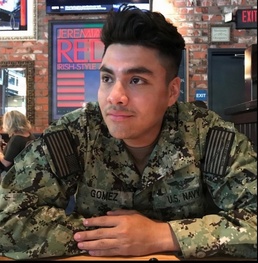
The sudden death of Petty Officer Second Class (PO2) William Amilcar Gomez Jr. during a military training exercise in 2025, was a shock that reverberated through the lives of his family, friends, and colleagues. At age 29, he was very active and told his family he was looking forward to advancing his career in the Navy after graduating from the Universal Technical Institute just a month earlier. During a combatives training exercise, PO2 Gomez quickly became unresponsive. Despite prompt medical attention, he tragically could not be resuscitated.
His sudden death was evaluated thoroughly by the Armed Forces Medical Examiner System (AFMES), but his autopsy examination did not immediately reveal a clear explanation for his death. Sudden unexpected deaths, especially under age 40, can sometimes be due to genetic conditions which do not always have clear anatomic findings at autopsy. Postmortem genetic testing is recommended to help inform the cause of death and to provide information that can help tailor medical management for surviving family members. A collaboration between AFMES and the Military Cardiac Arrest Program (MiCAP) postmortem genetics team at the Uniformed Services University of the Health Sciences provides postmortem genetic testing in cases of young, sudden death or a suspected underlying genetic condition. Through this collaboration, postmortem genetic testing was completed for PO2 Gomez, in alignment with published best practices from the National Association of Medical Examiners and the American College of Medical Genetics and Genomics.
The results of PO2 Gomez’s genetic testing were initially inconclusive. However, the MiCAP team’s extensive review uncovered new evidence, which prompted the testing laboratory to re-evaluate the results. This led to the discovery of a previously undescribed genetic variant linked to an increased risk for dilated cardiomyopathy and associated arrhythmias. This breakthrough not only clarified the cause of PO2 Gomez’s death but also resulted in the laboratory updating their reporting of this result internally and across national databases. Ultimately this finding impacted the results for hundreds to thousands of other patients who had testing of the same gene, which previously was not known to cause heart disease on its own.
In addition to explaining PO2 Gomez’s sudden death, this genetic finding has significant implications for the health of surviving family members. There is about a 50% chance that PO2 Gomez’s parents and siblings have the same genetic variant and are at risk for sudden cardiac death.
“This information can be a powerful tool for predicting risk and tailoring medical care of surviving family members, with the goal of decreasing the risk of another catastrophic event within the family," says Dr. Lydia Hellwig, a clinical genetic counselor and leader of MiCAP.
The MiCAP team recommended genetic testing for these relatives so that anyone at risk can undergo treatment to proactively reduce the risk of life-threatening arrhythmias and other heart problems. This newly described genetic finding may prove vital in preventing future tragic deaths from occurring in PO2 Gomez’s surviving family members. Even beyond PO2 Gomez’s direct relatives, this clearer understanding of his death improves our ability to maintain peak readiness for our service members This specific type of cardiomyopathy is one of many genetic heart conditions known to have risk for life-threatening arrhythmias and heart failure. Some of these individuals may be current or future military service members.
A variety of efforts to screen for and treat these serious heart conditions are currently being implemented. This includes congressionally mandated electrocardiogram screening for new recruits, development of a clinical guideline regarding the care of tactical athletes with inherited heart conditions, and awareness of clinical genetic testing within the military health system among service members experiencing symptoms or with family members who have a known disease-associated genetic variant. Improving our understanding of the underlying causes of sudden cardiac death in our service members is foundational to ensuring these screening efforts are effective.
While we cannot change the devastating loss of PO2 Gomez’s life, a thorough death investigation by a multidisciplinary team uncovered the likely explanation of his death. The newly described genetic finding will improve medical management for others at risk for sudden death and created a meaningful change in the understanding of genetic variants associated with these conditions for the population at large. This information is essential for efforts to improve readiness and reduce preventable deaths among our service members. This case exemplifies why it is vital to ask how we can detect and protect military service members at increased risk for cardiovascular disease. In this pursuit, we allow death to delight in helping the living (quote adapted from Giovanni Morgagni).
Original story written by: Austin Pagani, Assistant Professor of Medicine at The Uniformed Services University of the Health Sciences